2010-08-26
Explanation
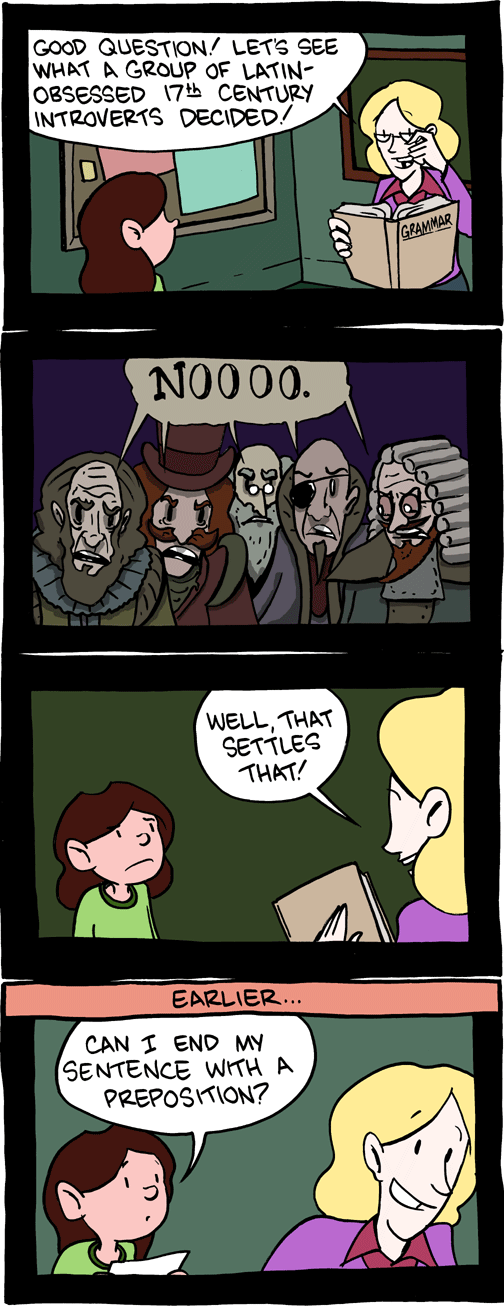
This comic mocks the common English grammar rule against ending sentences with prepositions. The comic is structured with the punchline-first and the setup revealed at the end via a flashback. In the first panel, a woman (likely a teacher or authority figure) holding a grammar book says sarcastically, "Good question! Let's see what a group of Latin-obsessed 17th century introverts decided!" A group of stern-looking historical figures from that era then proclaims "NOOOO" in dramatic fashion, rejecting the grammatical construction. In the next panel, the woman cheerfully tells a child, "Well, that settles that!"
The final panel, labeled "Earlier...", reveals the original question that prompted all this: a child innocently asks, "Can I end my sentence with a preposition?" The humor lies in the absurdity of blindly deferring to centuries-old grammatical prescriptions. The rule against ending sentences with prepositions was largely invented by 17th-century grammarians like John Dryden, who tried to impose Latin grammar rules onto English -- a language where terminal prepositions are perfectly natural. The comic points out how silly it is that modern English speakers still follow rules created by socially awkward scholars who were obsessed with a dead language.
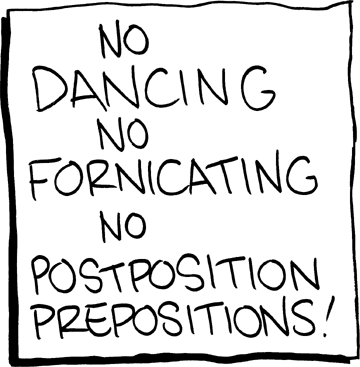
The votey panel shows a sign reading "NO DANCING / NO FORNICATING / NO POSTPOSITION PREPOSITIONS!" -- lumping the grammar rule in with puritanical prohibitions, reinforcing the idea that the anti-preposition rule is less about linguistic logic and more about uptight cultural attitudes. The joke also cleverly uses the technical linguistic term "postposition prepositions" (prepositions placed after their object, i.e., at the end of a sentence) in a way that sounds like a contradiction in terms.