2010-10-27
Explanation
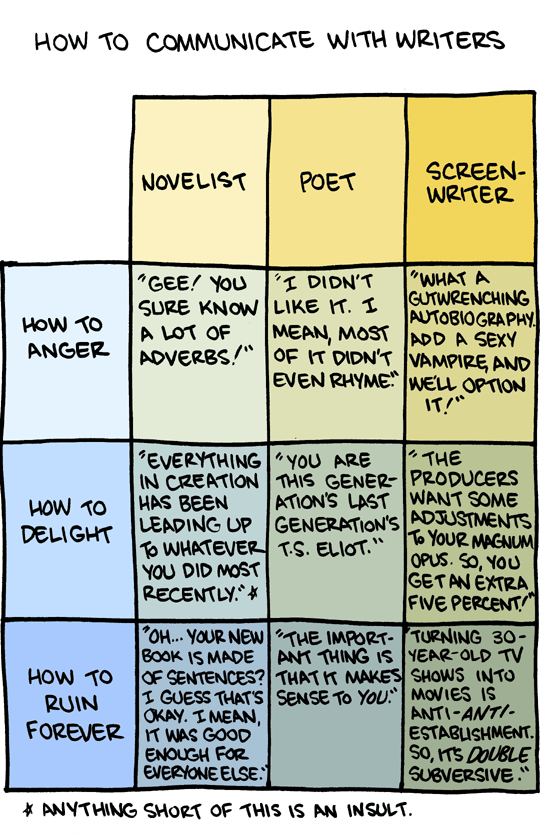
This comic presents a chart titled "How to Communicate with Writers," organized as a grid with three columns (Novelist, Poet, Screenwriter) and three rows (How to Anger, How to Delight, How to Ruin Forever). Each cell contains a quote illustrating the appropriate way to provoke the specified emotional response in each type of writer.
To anger a novelist, you say "Gee! You sure know a lot of adverbs!" (mocking their prose style). To anger a poet, you say "I didn't like it. I mean, most of it didn't even rhyme" (reducing poetry to its most simplistic definition). To anger a screenwriter, you suggest adding "a sexy vampire" to their "gutwrenching autobiography" and optioning it. To delight each type, you offer the most over-the-top flattery possible: telling the novelist everything in creation has led to their latest work, comparing the poet to T.S. Eliot, or offering the screenwriter a five percent raise from producers. The footnote notes that "anything short of this is an insult," capturing the fragile ego of creative professionals.
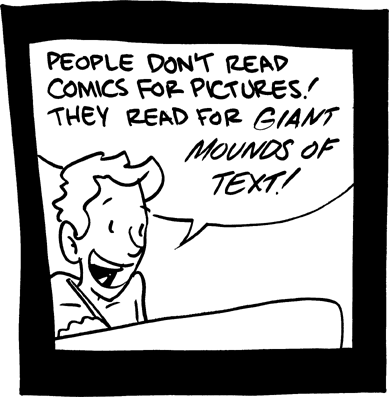
The "How to Ruin Forever" row is the darkest and funniest. The novelist is told their book is "made of sentences" with faint praise. The poet hears the devastating "The important thing is that it makes sense to you." And the screenwriter is told that turning 30-year-old TV shows into movies is "anti-anti-establishment" and therefore "double subversive" -- a savage parody of Hollywood's tendency to dress up lazy nostalgia-mining as something artistically meaningful. The votey panel shows a character at a drawing desk declaring "People don't read comics for pictures! They read for giant mounds of text!" -- a self-aware joke by Zach Weinersmith about the text-heavy, chart-based format of this very comic.