2010-11-01

Explanation
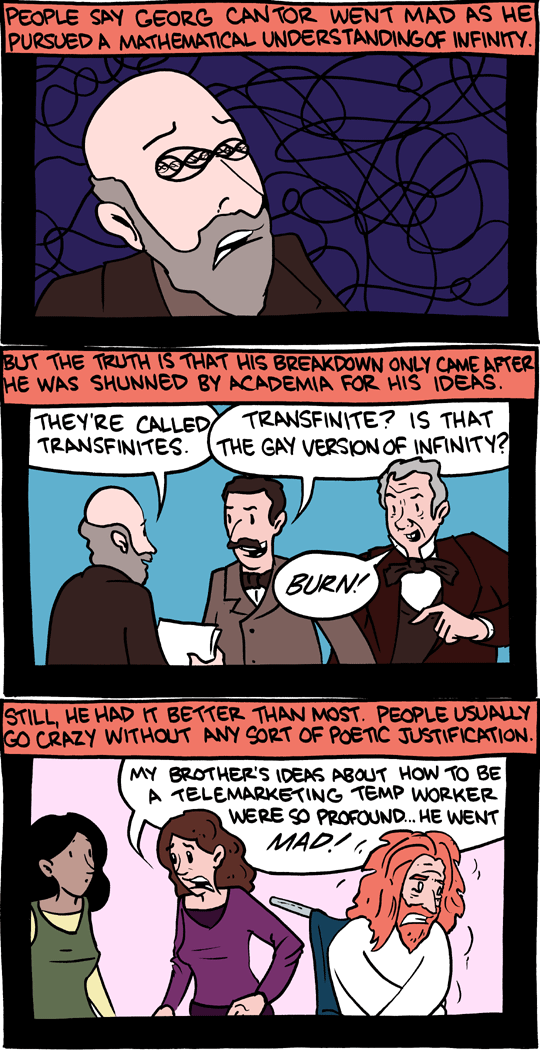
This comic explores the popular myth that mathematician Georg Cantor went mad from contemplating infinity, then subverts it with historical context and a punchline. The first panel presents the common narrative: "People say Georg Cantor went mad as he pursued a mathematical understanding of infinity," accompanied by an image of Cantor looking intense and surrounded by swirling, chaotic lines suggesting mental turmoil.
The second panel corrects the record: "But the truth is that his breakdown only came after he was shunned by academia for his ideas." It shows Cantor presenting his concept of transfinite numbers to colleagues, one of whom dismissively asks, "Transfinite? Is that the gay version of infinity?" while another shouts "Burn!" This panel makes the historically accurate point that Cantor's mental health struggles were driven not by the mind-bending nature of his mathematics, but by the professional rejection and ridicule he faced from contemporaries like Leopold Kronecker.
The third panel then undercuts the romantic "genius driven mad by forbidden knowledge" narrative entirely: "Still, he had it better than most. People usually go crazy without any sort of poetic justification." A woman introduces her brother, explaining that his ideas about how to be a telemarketing temp worker "were so profound... he went mad!" This is the comic's real thesis -- that mental illness is common and rarely has a grand intellectual cause. Cantor at least had a dramatic story; most people do not. The votey panel continues this theme with a telemarketer asking, "What if we telemarketed things people want?" and another person laughing hysterically, as if the very idea is the most absurd thing imaginable.