2010-12-16
Explanation
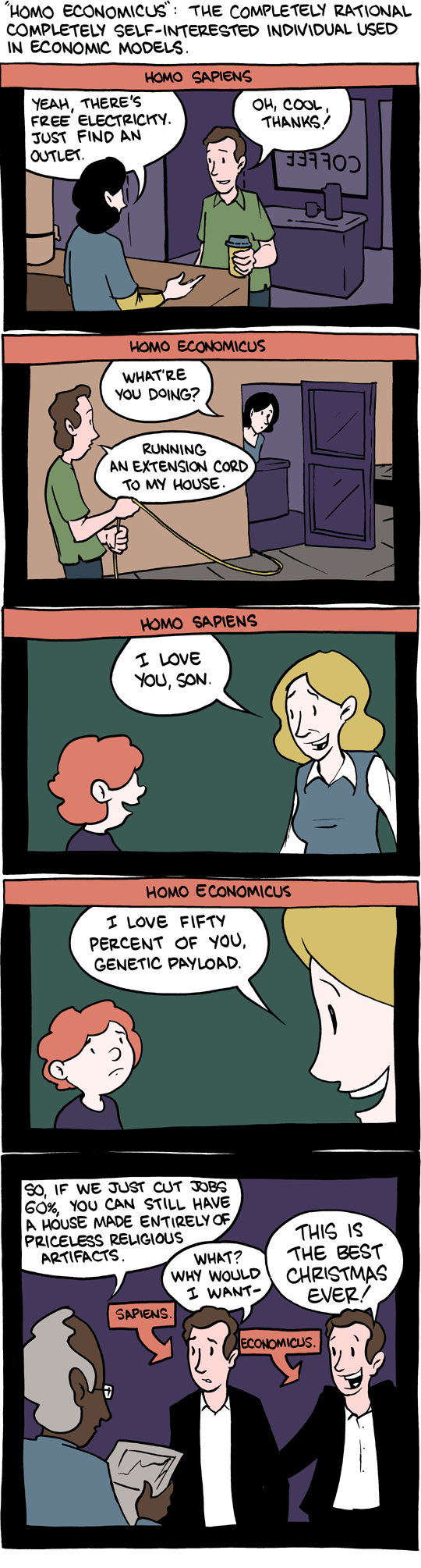
This comic contrasts the behavior of "Homo Sapiens" (regular humans) with "Homo Economicus," the theoretical perfectly rational, self-interested agent used in economic models. In the first pair of panels, a Homo Sapiens casually mentions free electricity from an outlet at a coffee shop, while the Homo Economicus exploits this by running an extension cord all the way to his house. In the second pair, a Homo Sapiens tells his child "I love you, son," while the Homo Economicus says "I love fifty percent of you, genetic payload" -- referencing the fact that a child shares only 50% of each parent's genes.
The final panel shows an economist delightedly reading about a plan to cut jobs by 60% so someone can afford a house made of priceless religious artifacts, calling it "the best Christmas ever," while a normal person is bewildered. The comic humorously illustrates why Homo Economicus is a poor model for real human behavior. While economic models assume people are perfectly rational maximizers, real humans are guided by social norms, emotions, and relationships. The absurdity of Homo Economicus's behavior -- stealing electricity, reducing parental love to genetic arithmetic -- highlights how strange and antisocial truly "rational" behavior would actually look.