2011-05-29
Explanation
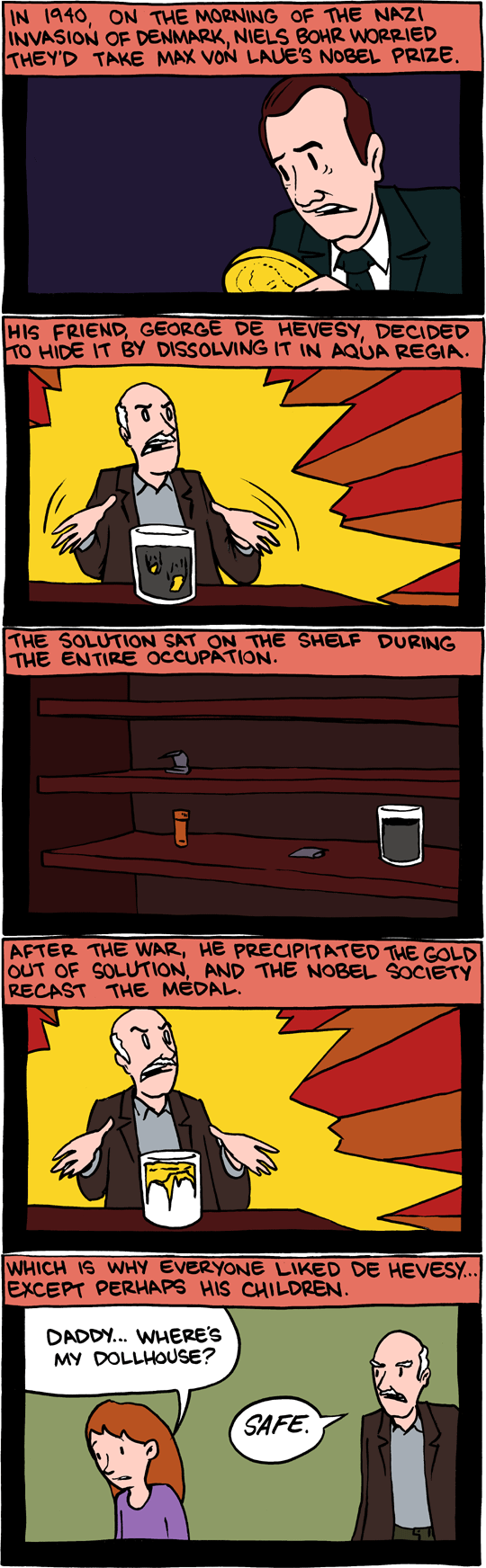
This comic tells the true story of how Nobel Prize medals were hidden from the Nazis during World War II. In 1940, on the morning of the Nazi invasion of Denmark, physicist Niels Bohr was worried that the Germans would confiscate the Nobel Prize medal belonging to Max von Laue (it was illegal under Nazi law to send gold out of Germany, and the medal had been sent to Bohr's institute in Copenhagen for safekeeping). Bohr's colleague, the Hungarian chemist George de Hevesy, came up with a brilliant solution: he dissolved the gold medal in aqua regia, a mixture of nitric and hydrochloric acids that is one of the few substances capable of dissolving gold.
The solution sat on a shelf in Bohr's laboratory for the entire duration of the Nazi occupation. The Nazis searched the institute but overlooked the unassuming jar of orange liquid, never suspecting it contained a Nobel Prize. After the war, de Hevesy precipitated the gold back out of the solution, and the Nobel Society recast the medal from the recovered gold. This is a real and well-documented episode in the history of science.
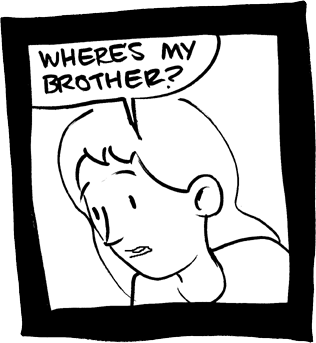
The comic's punchline imagines a domestic consequence of de Hevesy's talent for dissolving things: his daughter asks, "Daddy... where's my dollhouse?" and he replies simply, "Safe." The votey continues this gag with another child asking, "Where's my brother?" -- escalating the joke to suggest de Hevesy's compulsion to dissolve things in aqua regia has gotten dangerously out of hand. The comic is a great example of Weinersmith's love of blending real scientific history with absurdist humor.