2011-09-04
Explanation
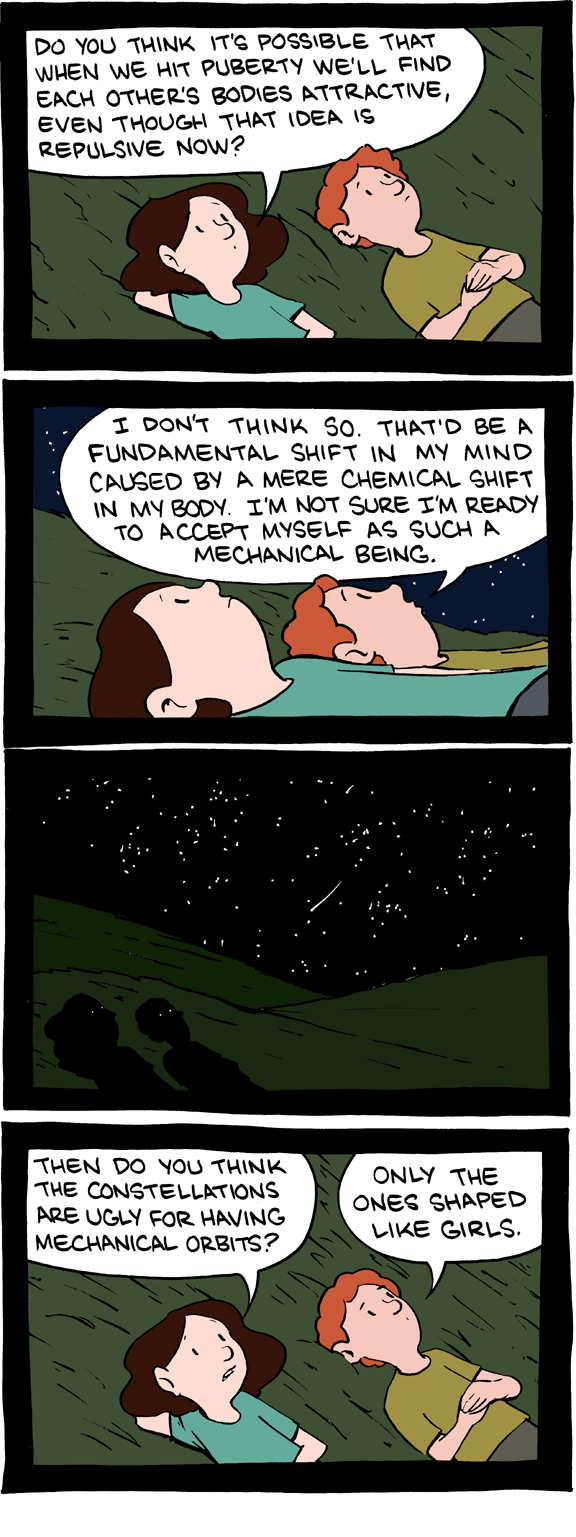
The comic shows two children -- a boy and a girl -- lying on a hillside at night, looking up at the stars. The girl asks whether they might find each other's bodies attractive once they hit puberty, even though the idea seems repulsive to them now. The boy dismisses the possibility, saying it would mean a "fundamental shift" in his mind caused by a "mere chemical shift" in his body, and he is not ready to accept himself as such a mechanical being.
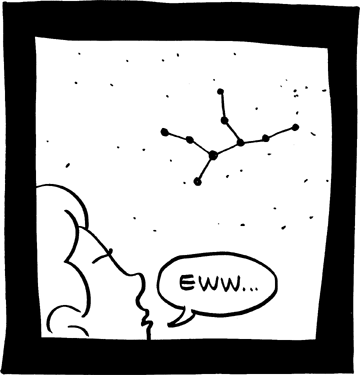
After a silent panel showing the beautiful starry sky, the girl poses a philosophical counter-question: "Then do you think the constellations are ugly for having mechanical orbits?" The boy responds, "Only the ones shaped like girls." The comic explores the tension between a romantic, free-will-oriented view of human consciousness and the reality of biological determinism. The girl's analogy is elegant -- the stars are not diminished by following the laws of physics, so why should human attraction be diminished by following the laws of biology? But the boy's punchline undercuts the philosophical moment with a joke that inadvertently proves her point: his dismissal of "girl-shaped" things reveals the very biological impulses he claims to reject are already influencing him.