2012-04-30
Explanation
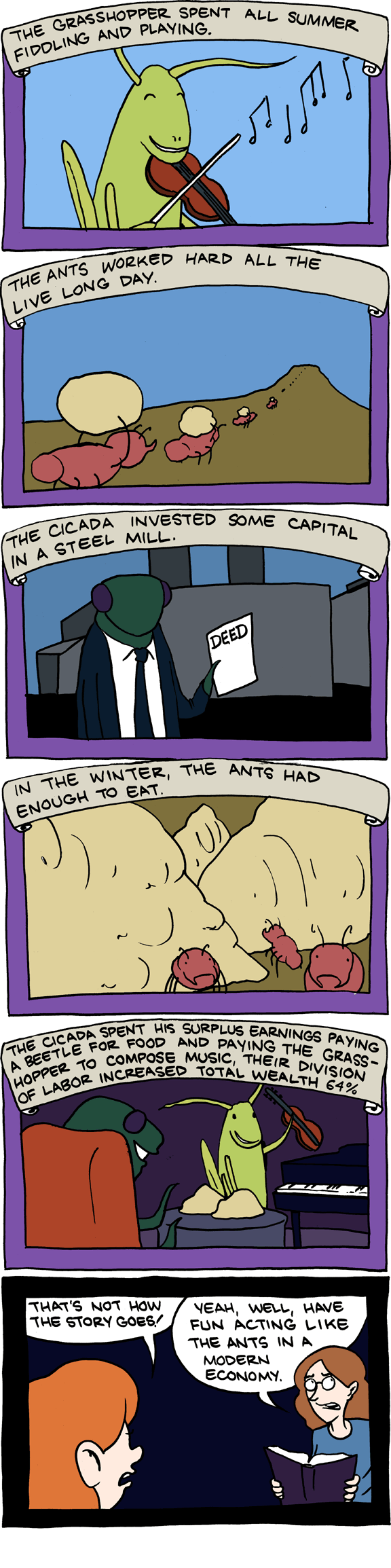
This comic reimagines Aesop'''s classic fable of "The Ant and the Grasshopper" through the lens of modern economics. The original fable teaches that the grasshopper, who played all summer while the ants worked, starves in winter -- a morality tale about the virtue of hard work and saving. Weinersmith'''s version introduces a third character: the cicada, who invests capital in a steel mill. When winter comes and the ants have enough food, the cicada uses his surplus earnings to pay a beetle for food and pays the grasshopper to compose music. Their division of labor increases total wealth by 64%.
The comic is being read as a bedtime story, and the child'''s parent objects: "That'''s not how the story goes!" The reader (who appears to be the other parent) retorts, "Yeah, well, have fun acting like the ants in a modern economy." The joke is that the original fable'''s moral -- just work hard and save -- is economically naive. In a modern economy, capital investment, specialization, and division of labor create far more wealth than everyone simply toiling away at manual labor.
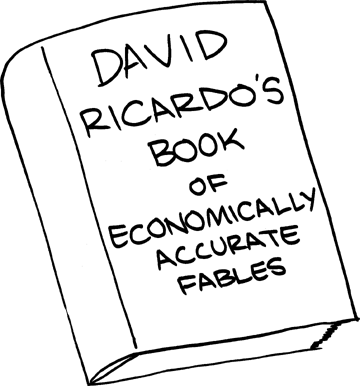
The votey panel reveals that the book is titled "David Ricardo'''s Book of Economically Accurate Fables," referencing David Ricardo, the 19th-century economist famous for his theory of comparative advantage, which demonstrates that trade and specialization benefit all parties even when one party is more efficient at everything. This is a quintessential SMBC comic in that it takes a familiar cultural touchstone and filters it through rigorous (if playful) academic analysis.