2012-05-08
Explanation
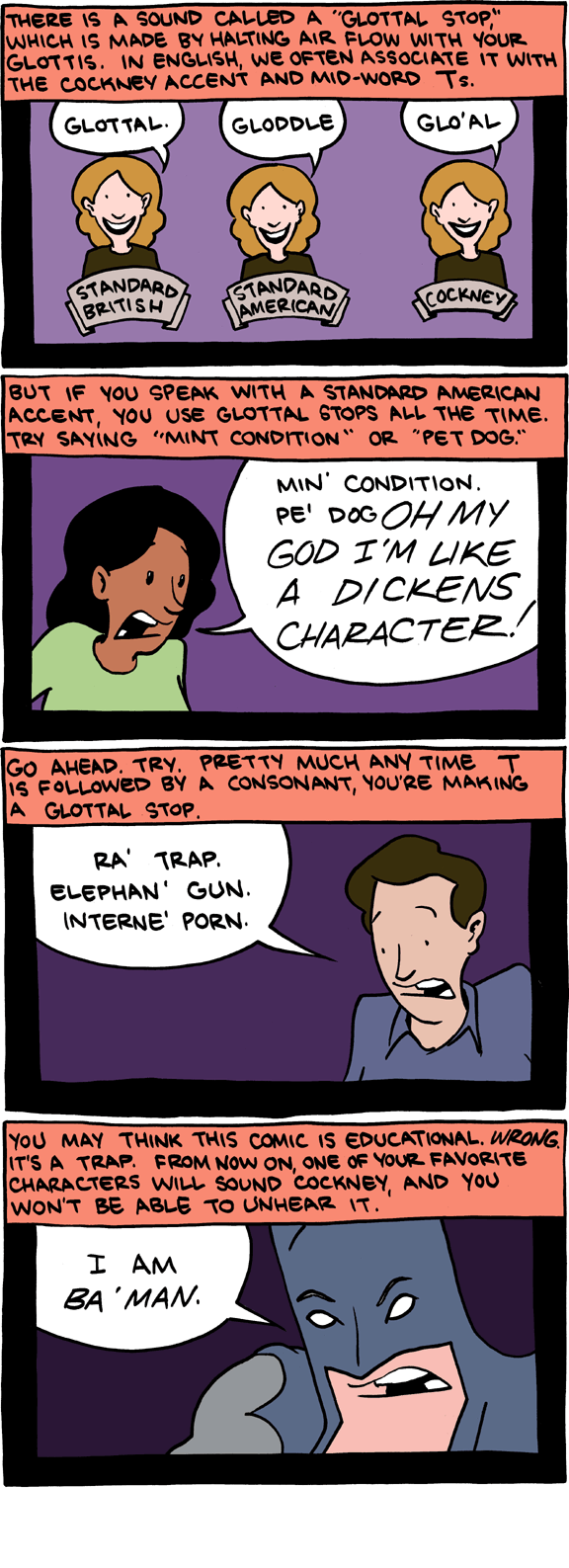
This comic is an educational comic about the "glottal stop" -- a speech sound made by halting airflow with the glottis (the part of the larynx containing the vocal cords). The comic explains that in English, we often associate this sound with the Cockney accent and mid-word T'''s. It shows three women pronouncing "glottal" in different accents: Standard British ("Glottal"), Standard American ("Gloddle"), and Cockney ("Glo'''al").
The comic then reveals a surprising linguistic fact: American English speakers use glottal stops all the time without realizing it. It invites the reader to try saying "mint condition" or "pet dog" and notice that the T sounds are actually glottal stops ("min''' condition," "pe''' dog"). One character has the alarming realization: "Oh my God I'''m like a Dickens character!" -- since Charles Dickens frequently wrote Cockney dialect characters using dropped T'''s. The comic goes further, noting that pretty much any time T is followed by a consonant, you'''re making a glottal stop, with examples like "ra''' trap," "elephan''' gun," and "interne''' porn."
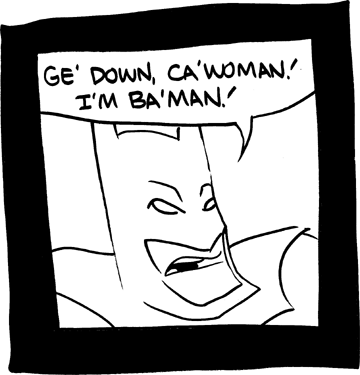
The final panel delivers the real punchline: "You may think this comic is educational. WRONG. It'''s a trap. From now on, one of your favorite characters will sound Cockney, and you won'''t be able to unhear it." It shows Batman saying "I am Ba'''man" -- highlighting that Batman'''s name, when spoken naturally by an American, contains a glottal stop. The votey continues this with Batman saying "Ge''' down, Ca'''woman! I'''m Ba'''man!" The comic succeeds both as a genuine linguistics lesson and as a piece of comedic trolling that permanently alters how readers hear certain words.