2012-05-28
Explanation
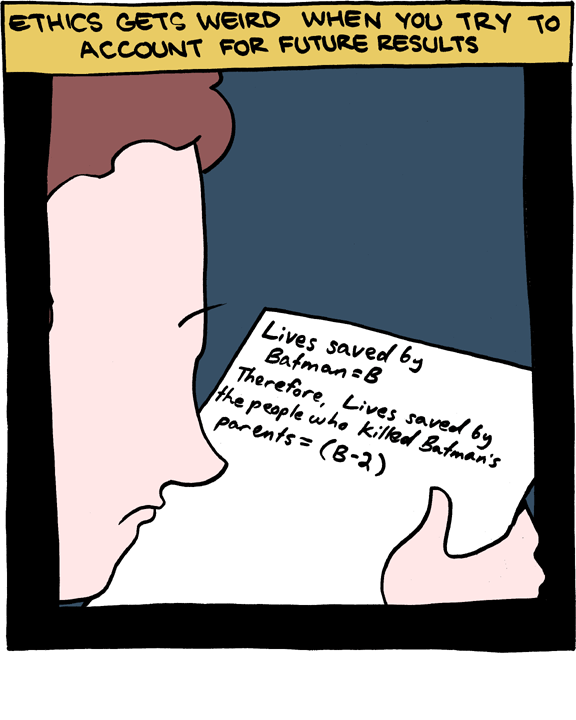
This single-panel comic, titled "Ethics gets weird when you try to account for future results," explores a consequentialist thought experiment involving Batman. A person reads a note that works through a piece of utilitarian logic: if Batman has saved B lives over his career, then the people who murdered Batman's parents -- the traumatic event that motivated Bruce Wayne to become Batman -- have indirectly saved (B-2) lives, since their crime caused only two deaths but set in motion the chain of events that would save many more.
The humor lies in the absurd but technically valid consequentialist reasoning. By strict utilitarian accounting, if Batman's crime-fighting career saves enough lives, then his parents' murderer did more net good than harm. This satirizes a well-known problem with purely consequentialist ethics: it can produce conclusions that feel deeply wrong on a moral intuition level. Most people would agree that murdering two innocent people is evil regardless of the unintended downstream effects, but a strict utilitarian calculation might disagree.