2012-08-22

Explanation
This is an ambitious, multi-panel comic that imagines a society where "strife" in relationships is treated as a quantifiable, tradeable economic commodity. The comic opens with a graph showing that individual relationships can only sustain so much strife before becoming unstable, and that long-term relationships correlate with lower crime rates. From this premise, it builds an elaborate thought experiment.
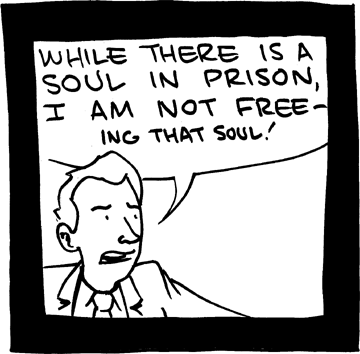
The comic follows a series of consequences: economists discover the overall rate of divorce correlates with overall strife, so a nationwide strife reduction would save 2% of GDP lost to divorce attorneys and lower productivity. A "strife cap-and-trade market" is established (parodying carbon cap-and-trade systems). At the individual level, people begin trading "strife credits" -- one woman wants to call someone a bastard and break a trophy, so she tries to buy strife credits, while another offers fresh-baked cookies in exchange. The kindest people become rich and powerful while the cruelest become poor. But without jerks, the economy falters (no one can deny paternity leave requests or stand firm in foreign policy negotiations). Stability concerns produce massive strife inflation. Eventually, with strife effectively free, "the jerks were back in charge within months," and a new manager announces replacing "maternity leave" with "leave, maternity."
The comic is a satirical economic thought experiment about whether human conflict serves a necessary social function. It parodies real economic concepts (cap-and-trade, inflation, conservation laws) while arguing that a certain amount of interpersonal strife may be essential for society to function -- jerks, it suggests, play a necessary role in maintaining economic and social structures. The final panel shows a politician promising unbridled contempt as a campaign platform, completing the cycle.
The votey shows a politician shouting "More less worseness! Now!" -- satirizing how political slogans become increasingly meaningless and contradictory, which ties back to the comic'''s theme about the absurdity of trying to systematize human conflict.