2012-10-07
Explanation
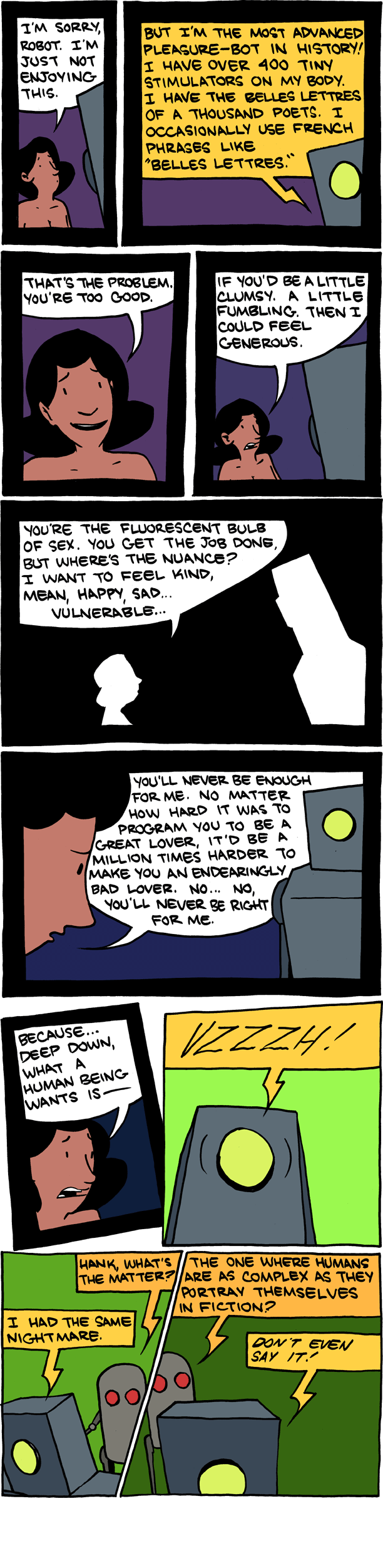
This comic imagines a future where a highly advanced "pleasure-bot" -- a robot designed for sexual companionship -- is rejected by a human woman, not for being inadequate, but for being too perfect. The robot boasts over 400 tiny stimulators, the literary output of a thousand poets, and occasional use of French phrases like "belles lettres." The woman explains that the problem is exactly that perfection: she wants someone clumsy and fumbling, so she can feel generous. She calls the robot "the fluorescent bulb of sex -- you get the job done, but where's the nuance?" She wants to feel kind, mean, happy, sad, and vulnerable -- the full range of messy human emotion.
The robot is then told it will never be enough because, no matter how hard it was to program it as a great lover, it would be a million times harder to make it "an endearingly bad lover." Before the woman can finish explaining what humans truly want, the robot self-destructs with a "VZZH!" In the final panel, two robots discuss having the "same nightmare" -- the one where humans turn out to be "as complex as they portray themselves in fiction." The comic is a thoughtful meditation on the paradox of human desire: we do not actually want perfection, because imperfection is what makes intimacy meaningful. The robots' nightmare -- that human complexity is real and not just fictional exaggeration -- is a clever inversion of the usual AI anxiety, where humans fear robots. Here, it is the robots who are terrified of us.