2012-12-29
Explanation
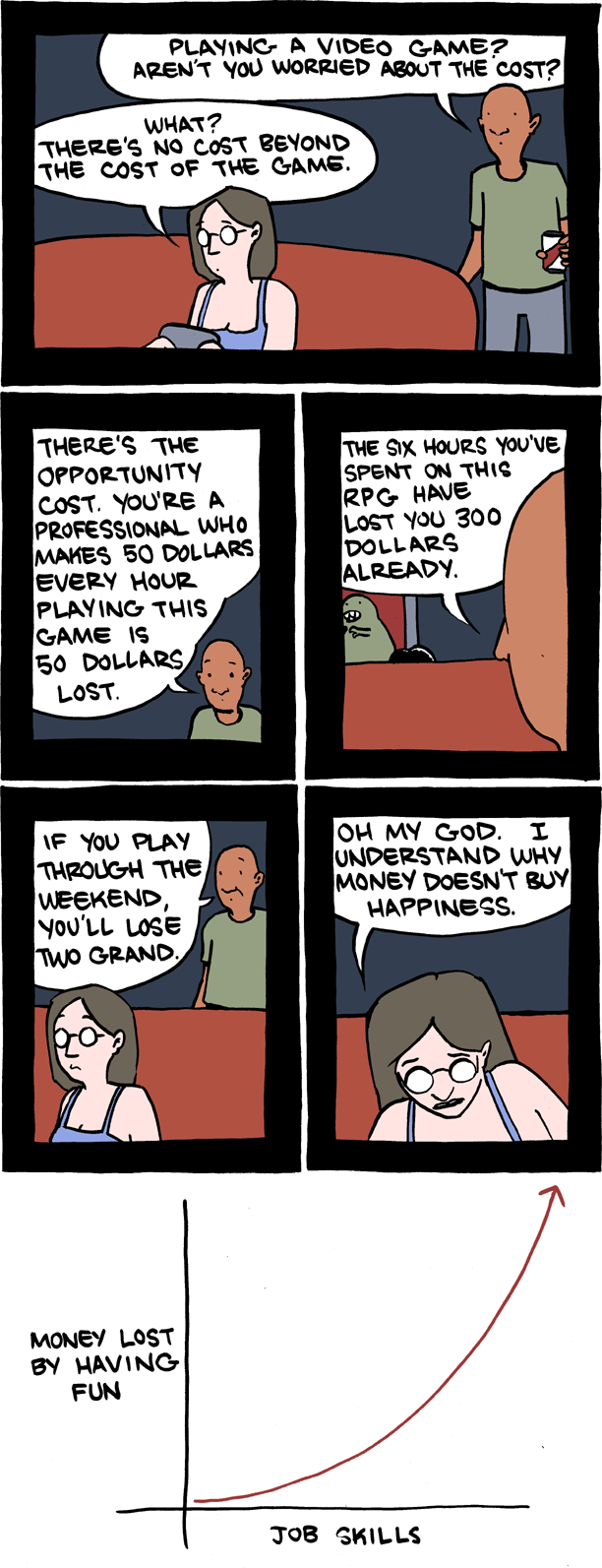
The comic shows a woman playing a video game on the couch while a man approaches and asks, "Aren't you worried about the cost?" She replies that there's no cost beyond the price of the game. He then explains the concept of opportunity cost: as a professional who makes $50 per hour, every hour spent playing the game is $50 lost. He calculates that her six hours of RPG playing have already "cost" her $300, and if she plays through the weekend, she'll "lose" two grand. The woman's response is, "Oh my God. I understand why money doesn't buy happiness." The comic ends with a graph showing that "money lost by having fun" increases exponentially with job skills.
The comic satirizes a misapplication of the economic concept of opportunity cost. While opportunity cost is a legitimate and useful idea in economics -- the value of the next best alternative you give up when making a choice -- the man is applying it in an absurdly rigid way by suggesting that every leisure hour must be measured against potential earnings. Taken to its logical conclusion, this means that the more skilled and highly paid you become, the more "expensive" it becomes to do anything enjoyable, which is why "money doesn't buy happiness" -- not because wealth fails to provide joy, but because an economist's framework makes leisure increasingly guilt-inducing. The graph at the bottom drives this point home, showing an exponential curve where having more job skills means more "money lost" to fun. The comic cleverly critiques the tendency to reduce all human experience to economic calculations.