2013-07-31
Explanation
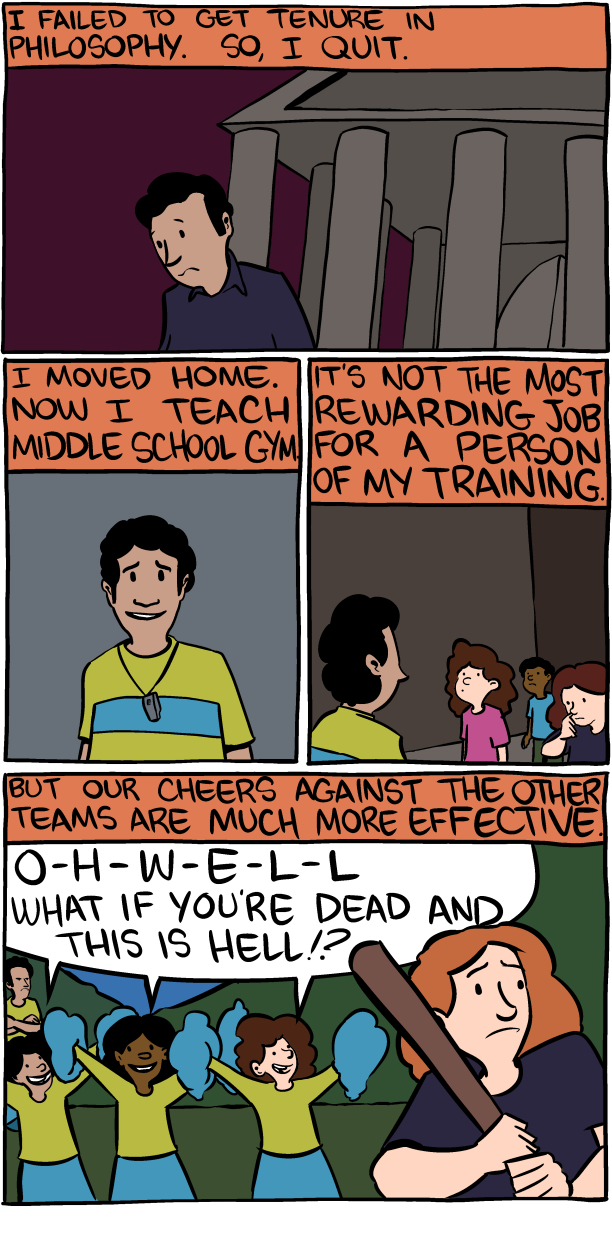
The comic tells the story of a man who failed to get tenure in philosophy, so he quit academia. He moved home and now teaches middle school gym class. He notes that it is not the most rewarding job for a person of his training, but then adds a surprising twist: his cheers against the other teams are much more effective. The final panel shows him leading students in a cheer: "O-H-W-E-L-L, what if you're dead and this is Hell?"
The humor comes from the collision of two very different worlds. A philosophy PhD bringing existential dread and metaphysical doubt to a middle school gym class is inherently absurd. Instead of the usual simple, encouraging sports cheers, this failed philosopher weaponizes his training to deliver cheers that are psychologically devastating -- questioning the fundamental nature of reality and suggesting the opposing team might already be dead and in Hell. The joke is that philosophical training, while perhaps not useful for getting tenure, turns out to be devastatingly effective for trash talk and psychological warfare in children's sports.
The cheer itself references philosophical thought experiments about whether we can truly know if we are alive or if our perceived reality is some form of afterlife or simulation -- concepts explored by thinkers from Descartes to contemporary philosophers of mind. Applying these heavy existential questions in a cheery, rhythmic sports chant format is the core comedic contrast.
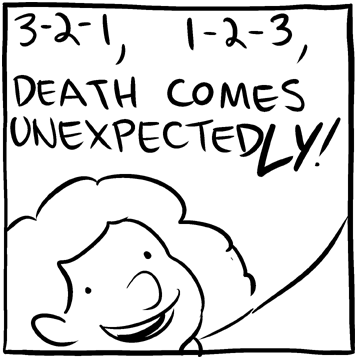
The votey continues the theme with a cheerful chant: "3-2-1, 1-2-3, death comes unexpectedly!" This further demonstrates how the philosopher-turned-gym-teacher channels existential anxiety about mortality into devastatingly effective (and deeply unsettling) sports cheers.