2014-10-05
Explanation
The Joke
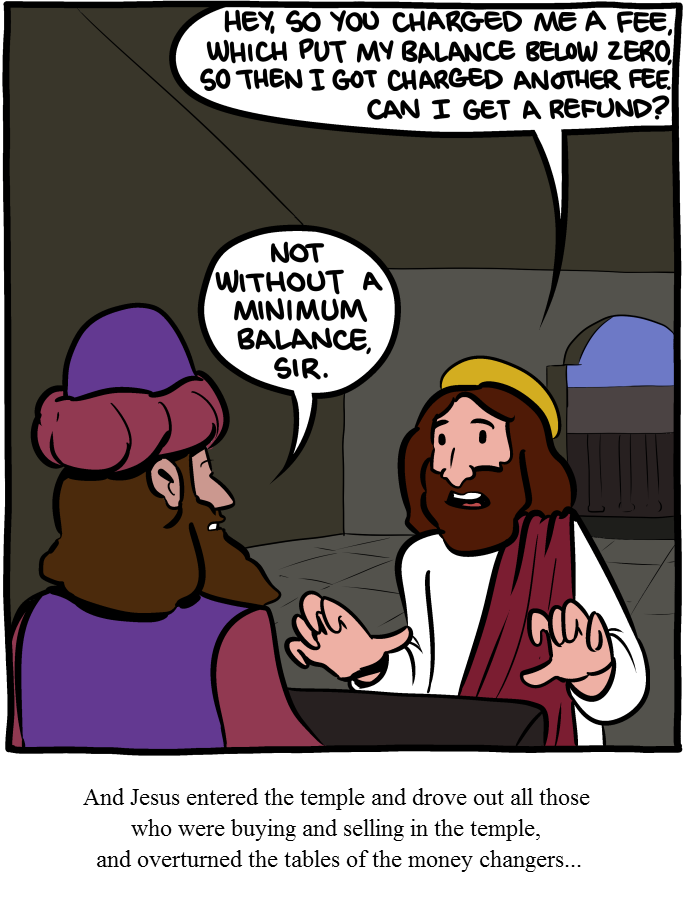
A man is at a temple (or bank) complaining to a money changer (depicted as Jesus) about a Catch-22 situation with fees: a fee was charged that put his balance below zero, which triggered another fee for having a balance below the minimum, and now he cannot get a refund because he does not have the minimum balance required. The caption below reads: "And Jesus entered the temple and drove out all those who were buying and selling in the temple and overturned the tables of the money changers..."
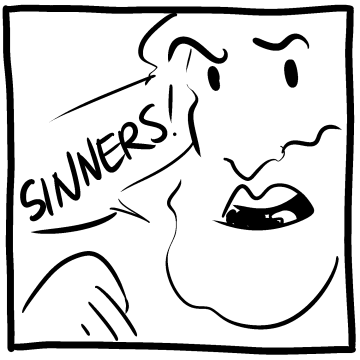
The joke reinterprets the famous biblical story of Jesus cleansing the temple. Instead of being motivated by righteous anger over the desecration of a holy place, this version implies Jesus flipped the money changers' tables because he was a frustrated customer dealing with predatory banking fees.
The Humor
The humor comes from the anachronistic collision of a well-known biblical event with the very modern frustration of dealing with bank overdraft fees and minimum balance requirements. The circular, kafkaesque logic of the fee structure (you owe a fee because of a fee, but you cannot resolve it without money you do not have because of the fee) is something many people can relate to. Reimagining one of the most dramatic moments in the New Testament as essentially a customer service complaint gives the scene a wonderfully mundane and relatable motivation. The visual depiction of Jesus as the money changer rather than the one flipping the tables adds an extra layer of absurdity.
References
This comic references Matthew 21:12 (and parallel passages in Mark 11:15-17, Luke 19:45-46, and John 2:13-16), in which Jesus drives out the money changers and merchants from the Temple in Jerusalem. The money changers in the historical context exchanged foreign currency for the Tyrian shekel required for temple offerings, often at exploitative rates.