2014-12-22

Explanation
The Joke
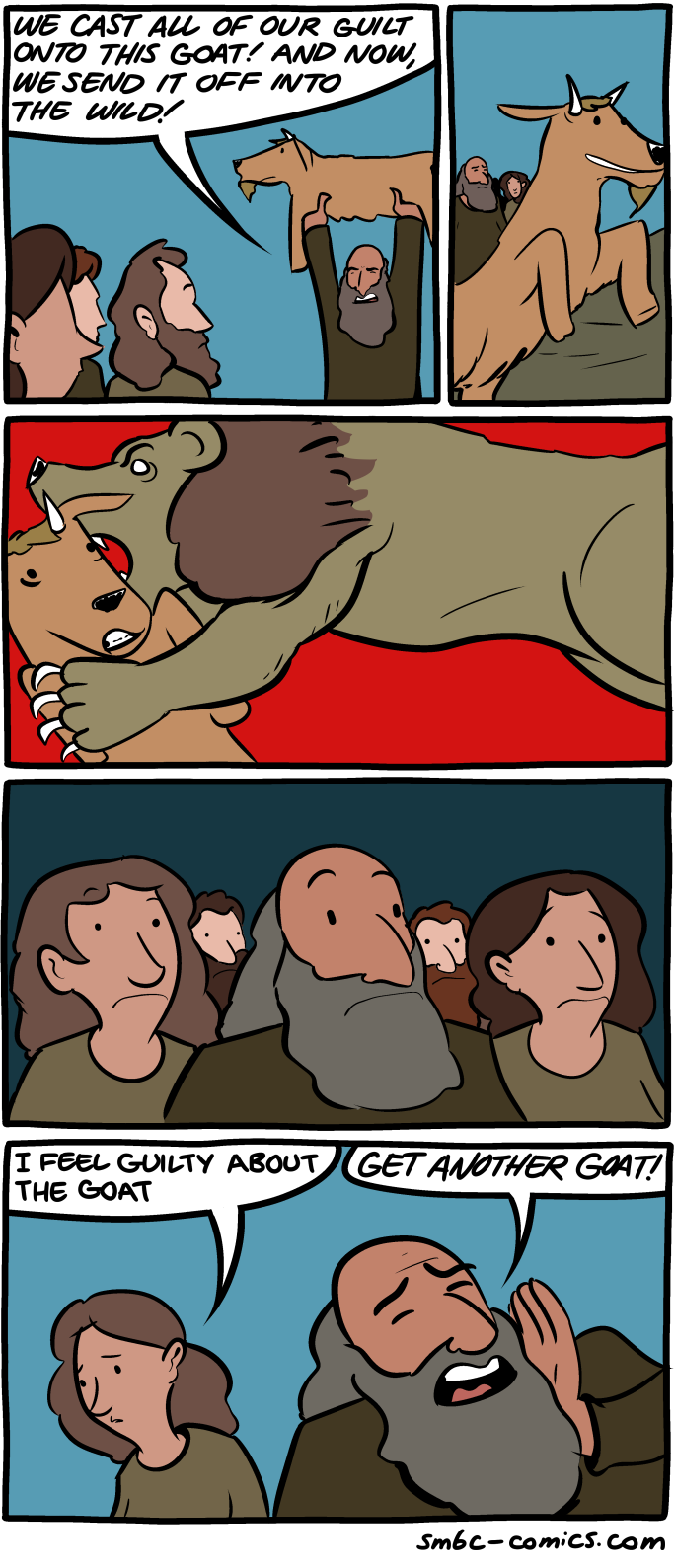
A group of ancient Israelites performs the scapegoat ritual: they cast all of their guilt onto a goat and send it off into the wild. After the goat leaves, one of them immediately says "I feel guilty about the goat." The solution? "Get another goat!" -- implying an infinite regression of guilt-transferring that can never actually resolve the underlying problem.
The Humor
The comic highlights a logical flaw in the concept of the scapegoat: if you can feel guilty about the act of scapegoating itself, then you need another scapegoat to bear that new guilt, which creates yet more guilt, and so on forever. The joke is that the ritual is self-defeating -- the very act of offloading guilt generates new guilt. The deadpan solution of "get another goat" suggests the characters are trapped in an absurd loop they will never escape, treating an infinite regress as a solvable logistics problem (just keep finding goats). It is a concise philosophical joke about the impossibility of externalizing moral responsibility.
References
- The Scapegoat ritual: In the Hebrew Bible (Leviticus 16), on the Day of Atonement (Yom Kippur), the High Priest symbolically placed the sins of the people onto a goat (the "Azazel" goat), which was then sent into the wilderness. This is the origin of the English word "scapegoat."
- Infinite regress: A philosophical concept where a solution to a problem creates the same problem again, leading to an endless chain. Here, each act of guilt-transfer creates new guilt requiring another transfer.