2015-02-09
Explanation
The Joke
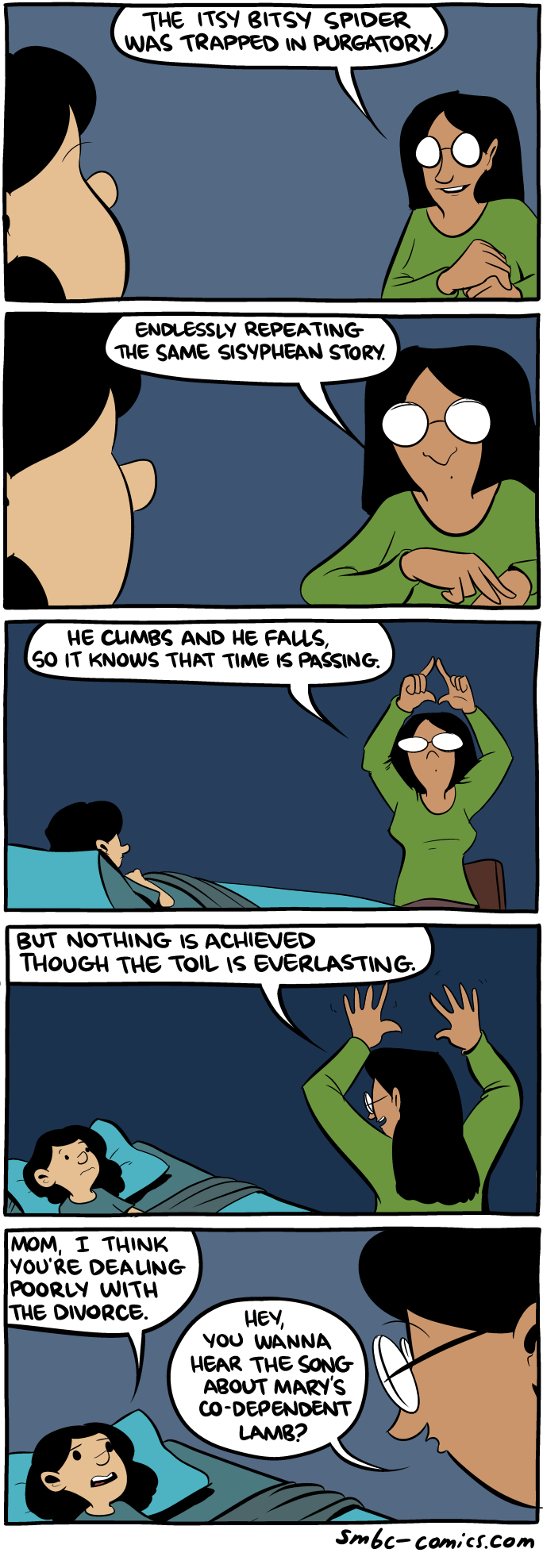
A woman performs a dark, existential reinterpretation of "The Itsy Bitsy Spider" for a child. She narrates: "The Itsy Bitsy Spider was trapped in purgatory, endlessly repeating the same Sisyphean story. He climbs and he falls, so it knows that time is passing, but nothing is achieved though the toil is everlasting." The child tells her she is dealing poorly with the divorce. She then asks if the child wants to hear the song about Mary's co-dependent lamb.
The Humor
The comic takes a cheerful children's nursery rhyme and reinterprets it through the lens of existential philosophy. The Itsy Bitsy Spider's endless cycle of climbing the waterspout and being washed down again is reframed as a Sisyphean punishment -- an eternity of futile labor in purgatory. The humor comes from the inappropriateness of sharing this bleak philosophical interpretation with a child, the child's perceptive diagnosis that the adult is projecting her feelings about a divorce onto the nursery rhyme, and finally the implication that she has similarly dark reinterpretations of other nursery rhymes ready to go, like recasting Mary's little lamb as a story about co-dependency.
References
The comic references the nursery rhyme "The Itsy Bitsy Spider" and the myth of Sisyphus from Greek mythology, who was condemned to roll a boulder up a hill for eternity only to watch it roll back down. This myth was famously explored by Albert Camus in The Myth of Sisyphus (1942). "Mary Had a Little Lamb" is another classic nursery rhyme, here reinterpreted through the lens of co-dependent relationships.