2015-03-01

Explanation
The Joke
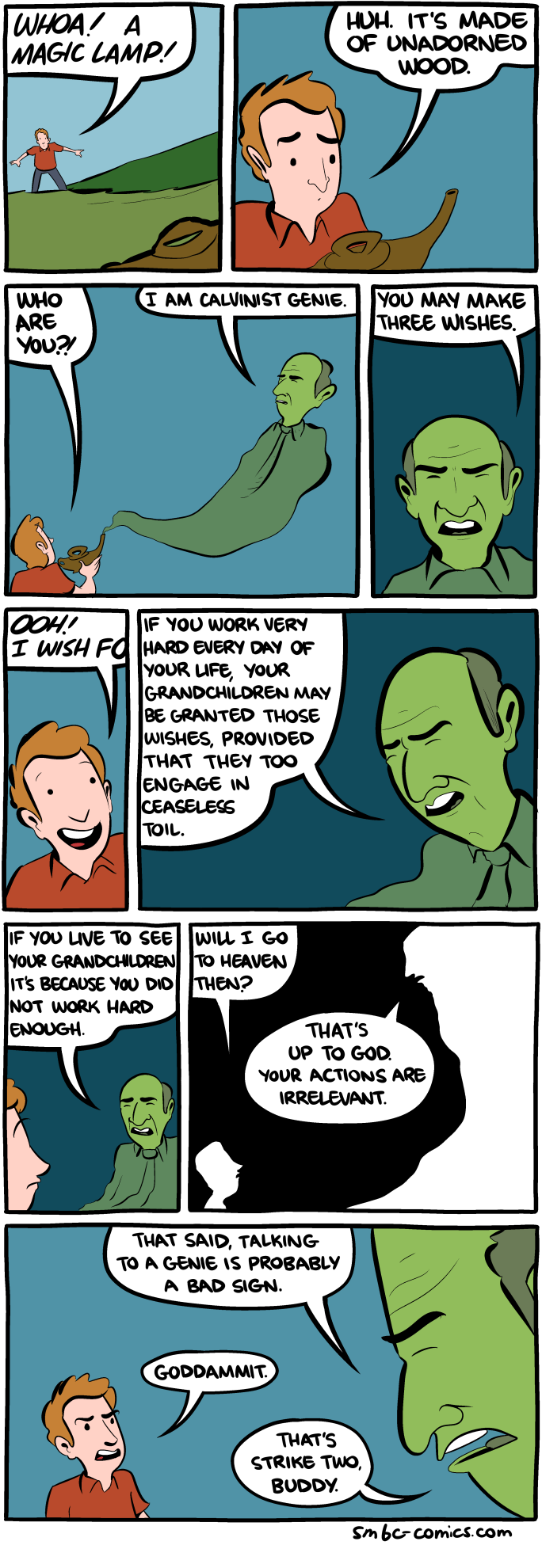
A person finds a magic lamp, but notes it's made of "unvarnished wood." The genie that emerges introduces himself as a "Calvinist genie." He tells the person they may make three wishes, but with a catch: "If you work very hard every day of your life, your grandchildren may be granted those wishes, provided they too engage in ceaseless labor."
The person asks if they will get to see their grandchildren enjoy the wishes, and the genie says that's because they "did not work hard enough." The person asks about going to heaven, and the genie says "That's up to God. Your actions are irrelevant." He then adds: "That said, talking to a genie is probably a bad sign." The person curses, and the genie says "That's the spirit, buddy."
The Humor
The comic takes the familiar "genie grants wishes" setup and filters it through Calvinist theology, which emphasizes predestination, the Protestant work ethic, and the idea that salvation is determined by God's will rather than human actions. Instead of instant gratification, the Calvinist genie offers a multi-generational delayed reward contingent on relentless labor — a parody of the "prosperity through hard work" ethos associated with Calvinist-influenced cultures. The extra twist of Calvinist predestination makes it even worse: not only must you and your descendants work endlessly for the wishes, but your ultimate salvation has nothing to do with any of this effort anyway. The genie's comment that talking to a genie "is probably a bad sign" implies that engaging with supernatural wish-granting is itself evidence of spiritual unworthiness.
References
- Calvinism: A major branch of Protestant theology founded by John Calvin in the 16th century. Key doctrines include predestination (God has already determined who will be saved), total depravity (humans are inherently sinful), and the idea that worldly success through diligent work may be a sign of God's favor — commonly known as the "Protestant work ethic."
- Max Weber's "The Protestant Ethic and the Spirit of Capitalism" (1905): Weber's influential thesis argued that Calvinist beliefs about predestination and worldly calling helped foster the development of modern capitalism, as believers sought evidence of their election through economic success.