a-monster-in-the-closet
Explanation
The Joke
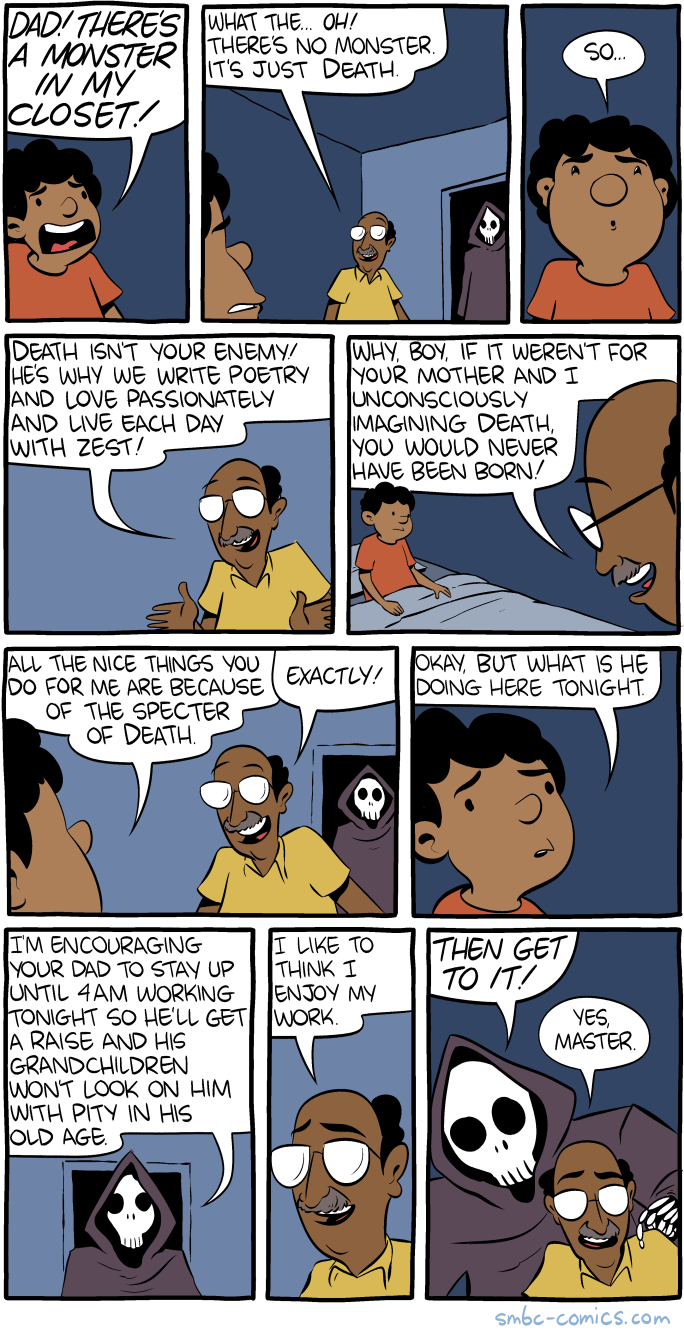
A child runs to his father, terrified that there is a monster in his closet. The father casually corrects him: it is not a monster, it is just Death (personified as a hooded skeleton, the Grim Reaper). Rather than being alarmed, the father cheerfully explains that Death is actually the reason they live life so fully -- writing poetry, loving passionately, and living each day with zest. He credits the constant specter of mortality as the motivation behind all the nice things he does for his family.
The child, trying to follow this existentialist logic, asks the obvious practical question: "Okay, but what is he doing here tonight?" It turns out Death is there to "encourage" the father to stay up working until 4 AM so he can get a raise, ensuring his grandchildren will not look on him with pity in his old age. Death says he likes to think he enjoys his work, and the father wearily complies with "Yes, master."
The Humor
The comic starts with a wholesome philosophical reframing of mortality -- the idea that awareness of death gives life meaning, a concept associated with existentialist thinkers like Heidegger and Camus. But the punchline subverts this by revealing that the father's relationship with Death is not an abstract philosophical inspiration but a literal, oppressive taskmaster driving him to overwork out of anxiety about the future. The cheerful existentialist spin was just a coping mechanism for being enslaved to mortal dread.
The final panel's "Yes, master" is darkly funny because it undercuts everything the father just said. He claimed Death made him live passionately and with zest, but in reality Death just makes him a sleep-deprived workaholic terrified of aging into poverty. The comic satirizes how people romanticize mortality anxiety when it often just manifests as stress and overwork.
References
The comic references existentialist philosophy, particularly the idea (associated with Martin Heidegger's concept of "Being-toward-death") that awareness of mortality is what gives human life urgency and meaning. This is also related to the Latin concept of "memento mori" ("remember you must die") and the Stoic practice of contemplating death to appreciate life.