actually
Explanation
The Joke
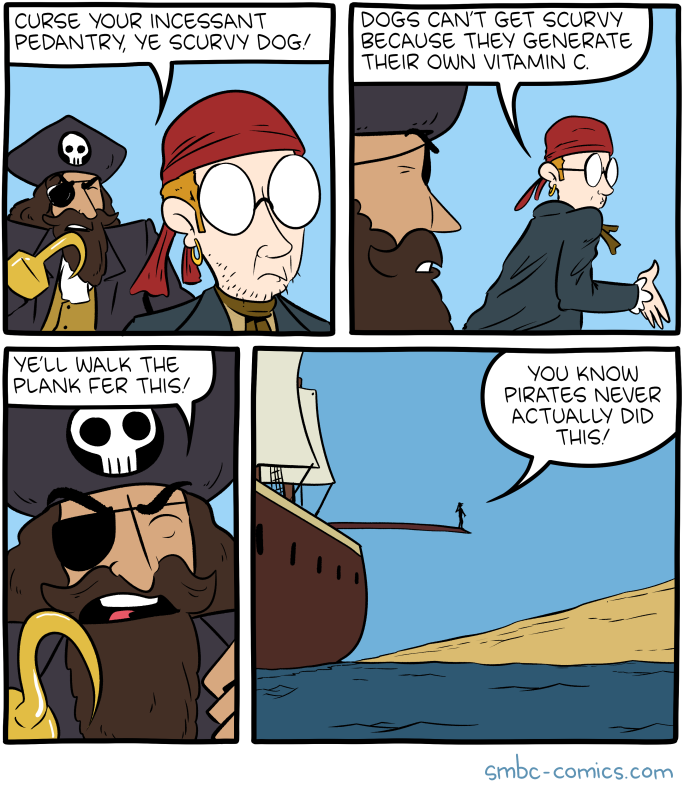
A group of pirates are aboard a ship, and one pirate insults another by calling them an "inelegant, peasantly, ye scurvy dog!" Another pirate then interjects with a pedantic "well, actually" correction: dogs can't get scurvy because they generate their own vitamin C. This is a factual observation — unlike humans and guinea pigs, most mammals (including dogs) can synthesize their own vitamin C and are therefore not susceptible to scurvy. The first pirate, annoyed, forces the pedantic one to walk the plank.
The final panel shows the pedantic pirate in the water, adding one more correction: "Did you know Blackbeard actually did that?" — implying that walking the plank as a pirate punishment is largely a myth, and the pedant can't resist one more "actually" correction even while being punished for the first one.
The Humor
The comic is a satire of the "well, actually" personality type — people who compulsively correct others with technically true but socially unwelcome facts. The pirate setting heightens the comedy because pirates are supposed to be rough, violent, and unconcerned with factual accuracy. Having a pedantic nerd among them who can't stop himself from making corrections, even as he's literally being made to walk the plank for doing so, is the perfect illustration of how this personality type simply cannot help themselves. The escalation — correcting people even while being punished for correcting people — is the key comedic beat.
References
It is indeed true that most mammals can synthesize vitamin C, making "scurvy dog" a biologically inaccurate insult. Walking the plank, while a popular image in pirate fiction, has very little historical evidence supporting it as a common practice.