ad
Explanation
The Joke
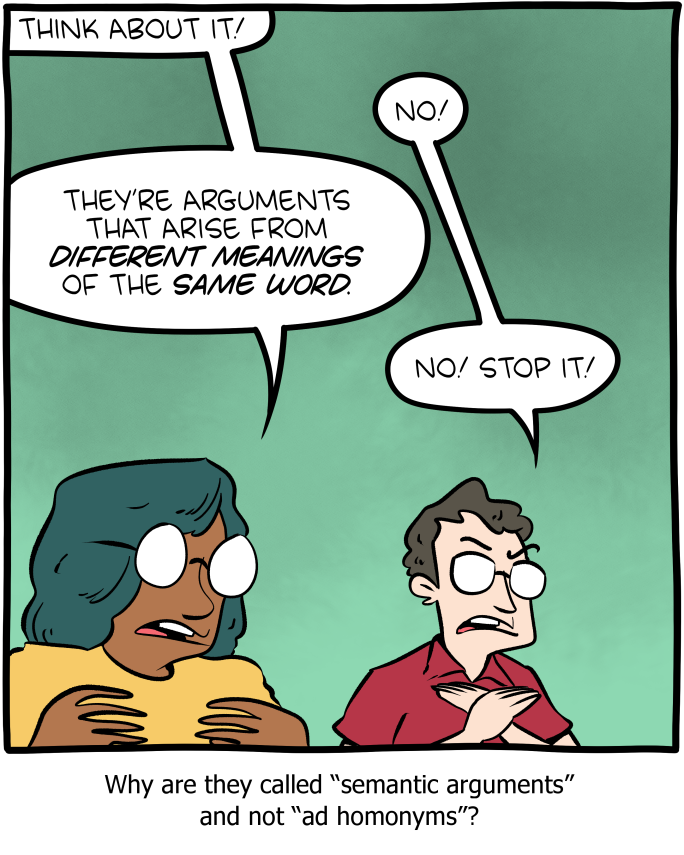
The comic opens with "THINK ABOUT IT" and presents a linguistics puzzle. A woman explains that "semantic arguments" are arguments that arise from different meanings of the same word. A man reacts with increasing agitation ("No!" and "No! Stop it!"). The caption asks: "Why are they called 'semantic arguments' and not 'ad homonyms'?"
Humor Mechanism
The joke is a pun that operates on multiple levels. "Ad hominem" is a well-known logical fallacy where you attack the person making an argument rather than the argument itself (Latin for "to the person"). "Homonyms" are words that share the same spelling or pronunciation but have different meanings. A "semantic argument" — a disagreement that stems from people using the same word with different meanings — could logically be called an "ad homonym" argument (an argument "to the homonym," i.e., caused by a homonym). The man's agitation at the setup mirrors the common reaction people have to puns: they can see the joke coming and are powerless to stop it. The "THINK ABOUT IT" header parodies meme formats that present supposedly mind-blowing observations.
Context
This comic combines philosophy (logical fallacies), linguistics (homonyms and semantics), and wordplay — a classic SMBC trifecta. "Ad hominem" is one of the most commonly cited logical fallacies in internet discourse. Semantic arguments — where two people argue past each other because they are using the same word differently — are a frequent source of frustration in debates (for example, arguments about what "freedom" or "justice" means). The pun works because "ad homonym" sounds almost exactly like "ad hominem" and actually describes the phenomenon more accurately than the existing term "semantic argument." The man's reaction serves as a stand-in for the reader's groan.