adams-temptation
Explanation
The Joke
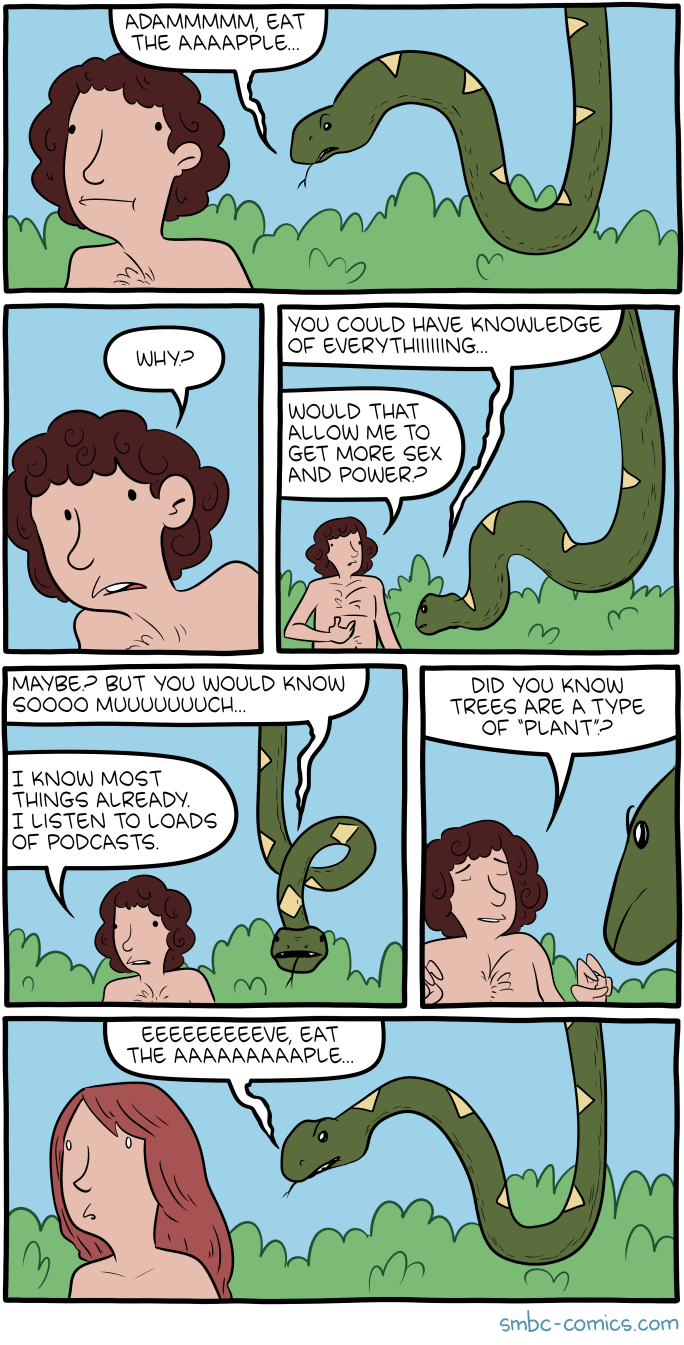
The comic retells the story of the Garden of Eden with a twist. The serpent tempts Eve (or possibly Adam -- the figure in the garden) to eat the apple, saying "Ahhhhhhh, eat the aaaaaple." The human asks "Why?" and the serpent explains "You could have knowledge of everything." The human then asks a series of practical follow-up questions: "Would that include... would that enable me to eat more and live longer and have power?" The serpent starts to hedge: "Maybe... but you would know sooooo muuuuuch..." The human presses further: "I know most things already. Can it lead to goods or services?" The serpent, frustrated, tries a different angle: "Uh... you know, ideas are a type of beauty?" The human remains unimpressed, and the serpent finally resorts to desperately hissing "Eeeeeeat the aaaaaple."
The joke inverts the traditional temptation narrative. Instead of humans being easily seduced by the promise of forbidden knowledge, this version depicts a human who is entirely unmoved by abstract knowledge and only cares about practical, material benefits. The serpent, cast here as a sort of frustrated intellectual, cannot convince the human that knowledge has intrinsic value.
The Humor
The comic is a commentary on anti-intellectualism and pragmatism. In the biblical story, the temptation of knowledge is irresistible. Here, Weinersmith imagines what would happen if the first humans were already pragmatic materialists who could not see the point of knowledge that does not directly translate into food, power, or consumer goods. The serpent's increasingly desperate attempts to sell the concept of "knowledge for its own sake" -- eventually resorting to the philosophical argument that "ideas are a type of beauty" -- parody the real-world experience of academics and intellectuals trying to justify the value of education and research to a public that primarily values practical outcomes.
References
The comic references the Book of Genesis, chapters 2-3, where the serpent tempts Eve to eat the fruit of the Tree of Knowledge of Good and Evil, which God had forbidden. In the original story, the temptation succeeds easily. The phrase "ideas are a type of beauty" echoes Platonic philosophy, where abstract forms (including truth and beauty) are considered the highest reality.