baa
Explanation
The Joke
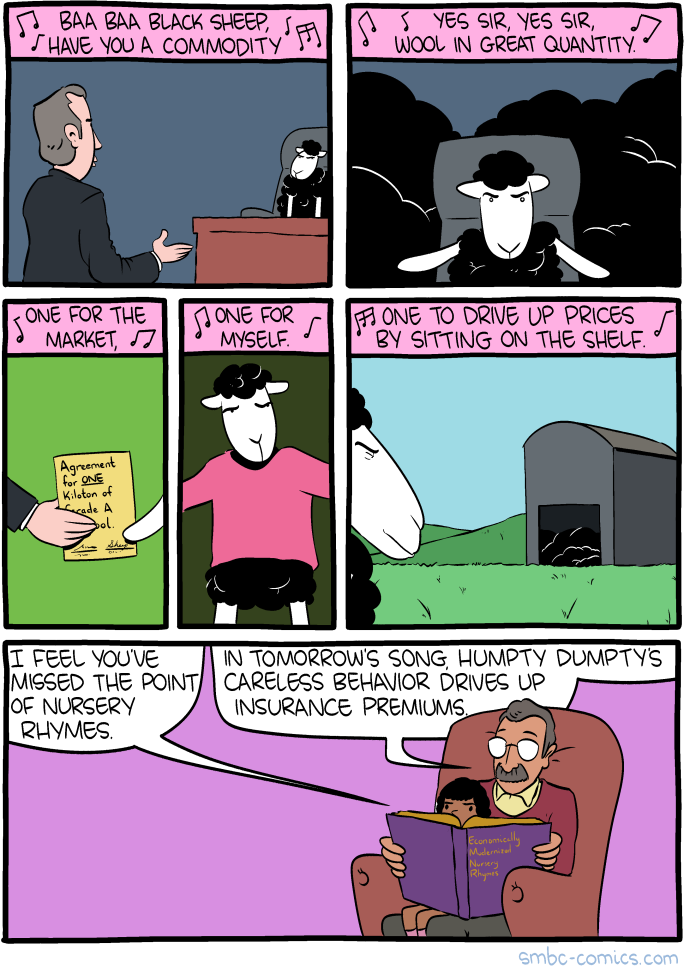
The comic takes several classic nursery rhymes and reimagines them through a modern, literal, or cynical lens. The first panel shows "Baa Baa Black Sheep" being questioned: "Have you any commodity?" and the sheep responds about wool "in great quantity." Another panel shows someone asking "One for the master? One for the dame?" and the sheep pragmatically replies "I've done up prices by sitting on the gain" -- turning the nursery rhyme into a commentary on market manipulation and commodity pricing.
In the lower panels, a character states "I feel you've missed the point of nursery rhymes," while the final panel shows someone reading a book that reinterprets "Humpty Dumpty's careless behavior" as driving up "insurance premiums." The comic systematically applies real-world economic and legal logic to the nonsensical world of nursery rhymes.
The Humor
The comedy comes from the absurdity of applying rigorous economic analysis to children's nursery rhymes, which were never meant to withstand such scrutiny. "Baa Baa Black Sheep" becomes a story about commodity markets and price manipulation. Humpty Dumpty's fall off a wall becomes an actuarial liability issue. The meta-joke in the panel where someone says "you've missed the point of nursery rhymes" acknowledges that this over-analysis is ridiculous, but the final panel shows the analyzer persisting anyway -- they cannot stop themselves from finding economic implications in children's literature. Weiner is satirizing the tendency of economists and policy wonks to see market forces and incentive structures in absolutely everything, even the most innocent contexts.
References
"Baa, Baa, Black Sheep" is an English nursery rhyme dating to at least 1731. "Humpty Dumpty" is another classic English nursery rhyme, first published in 1797. Some historians have attempted to find political or economic allegories in these rhymes (such as claims that "Baa Baa Black Sheep" references medieval wool taxes), which makes the comic's over-analysis an ironic commentary on that very tradition of over-interpretation.