base-systems
Explanation
The Joke
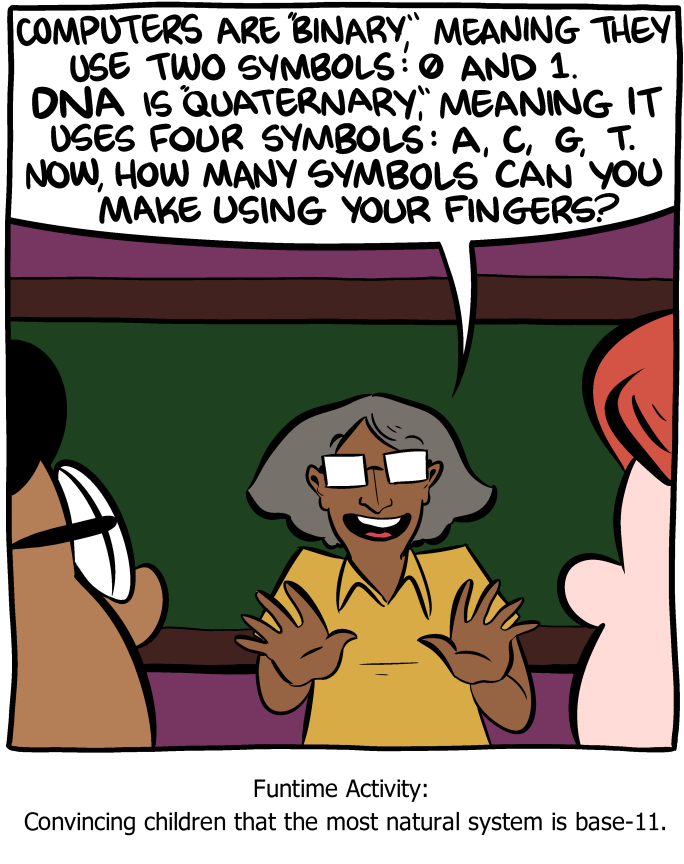
A teacher explains to students that computers are binary (base-2), using two symbols: 0 and 1. DNA is quaternary (base-4), using four symbols: A, C, G, and T. She then asks: "Now, how many symbols can you make using your fingers?"
The caption below reads: "Funtime Activity: Convincing children that the most natural system is base-11."
The Humor
The joke hinges on counting fingers. Humans have 10 fingers, which is why we use the base-10 (decimal) number system -- it seems "natural" because we can count to 10 on our hands. But the teacher is slyly pushing toward base-11, which would imply 11 countable digits. The implied eleventh "finger" is a crude anatomical joke -- the teacher is suggesting that boys have an additional appendage that could serve as a counting digit. This transforms an innocent math lesson into an inappropriate innuendo, made funnier by the fact that it is presented as a classroom activity for children.
References
Base systems (also called numeral systems or radixes) define how numbers are represented. Base-2 (binary) is fundamental to computing because digital circuits have two states (on/off). Base-4 (quaternary) maps to DNA's four nucleotide bases: adenine (A), cytosine (C), guanine (G), and thymine (T). Base-10 (decimal) is the standard human counting system, generally attributed to our having 10 fingers.