Biblical Literalism

Explanation
The Joke
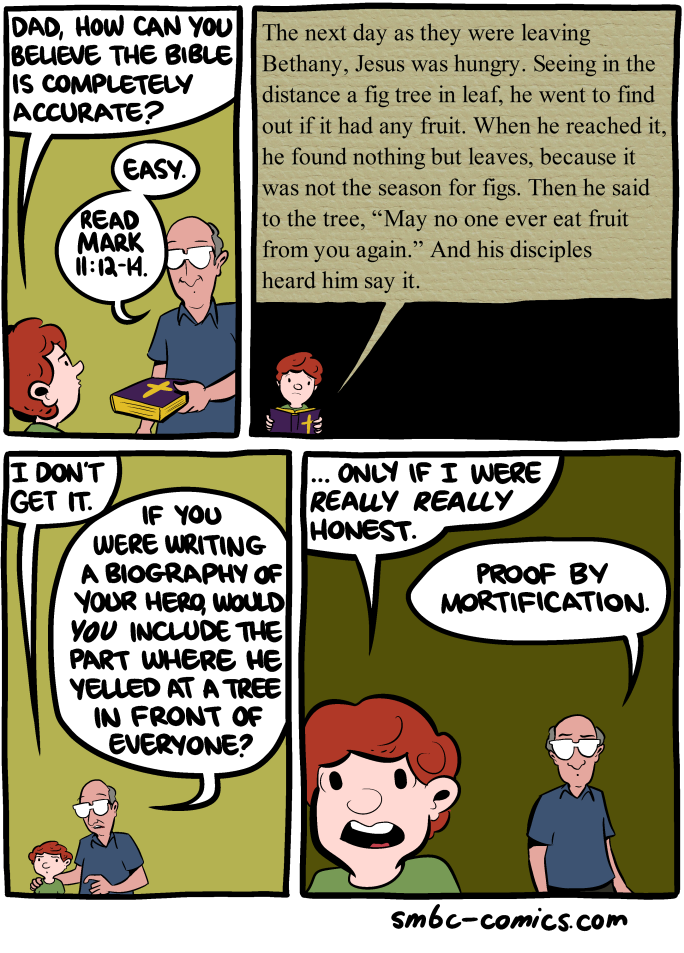
A parent is telling their child the biblical story of Jesus cursing the fig tree (found in the Gospels of Mark and Matthew). In the story, Jesus is hungry, finds a fig tree with no fruit, and curses it so that it will never bear fruit again. The child's parent reads the passage, and the child says they don't understand it. The parent explains: "If you were writing a biography of your hero, would you include the part where he yelled at a tree in front of everyone?"
The punchline reframes the story: if even Jesus's most devoted followers -- the ones writing his biography -- included this embarrassing-sounding episode, it must have actually happened, because why would you make up a story that makes your hero look petty? The final panel offers an alternative framing: "Only if it were really, really honest" with the caption "Proof by mortification."
The Humor
The humor comes from applying modern social sensibility to a biblical story. The idea of someone angrily yelling at a tree for not having fruit sounds absurd and embarrassing by modern standards, and the comic leans into this by suggesting the episode is so awkward that it serves as evidence of its own authenticity. "Proof by mortification" is a play on the historical concept of the "criterion of embarrassment" -- an actual method used by biblical scholars to assess the historicity of events in scripture. The reasoning goes: if a story would be embarrassing to early Christians, they probably wouldn't have invented it, so it's more likely to be historically authentic.
References
- The Cursing of the Fig Tree: Found in Mark 11:12-14, 20-25 and Matthew 21:18-22, where Jesus curses a barren fig tree and it withers.
- Criterion of Embarrassment: A real method in biblical scholarship and historical analysis, which holds that accounts that would be embarrassing or counterproductive for the authors to fabricate are more likely to be authentic. The comic's "proof by mortification" is a humorous renaming of this concept.