Biochemistry
Explanation
The Joke
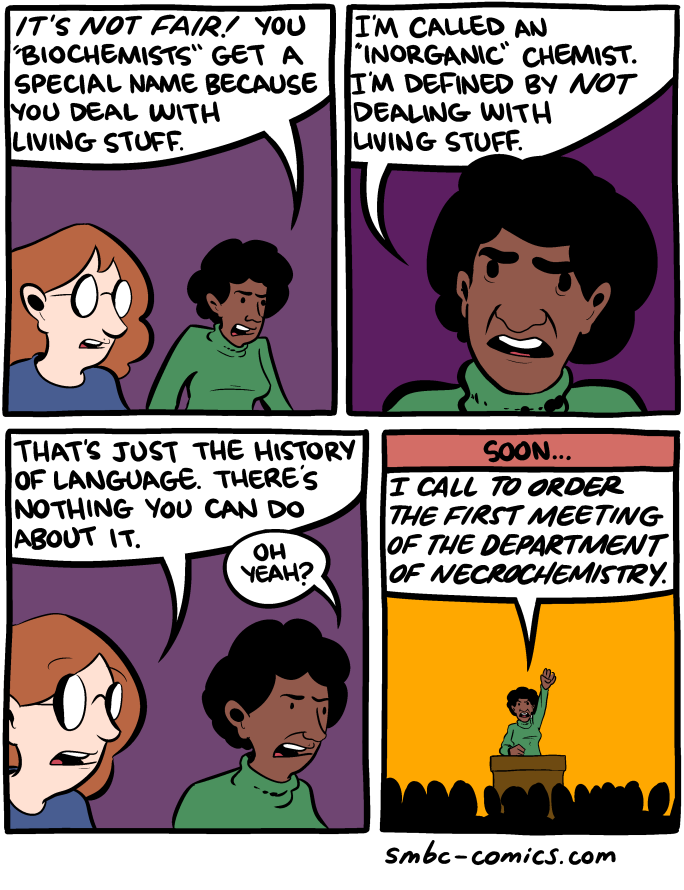
A person complains that it is unfair that "organic chemistry" gets a special name when all it deals with is carbon-based compounds and other "lame stuff." A woman who identifies as an inorganic chemist retorts that she is defined by what she does not study, rather than what she does. The first person says it is just the history of language and there is nothing to be done about it. The final panel, labeled "Soon," shows the inorganic chemist calling to order the first meeting of the "Department of Necrochemistry" -- rebranding her field with a much more dramatic and intimidating name.
The Humor
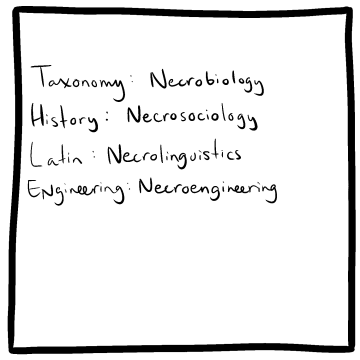
The comic plays on real frustrations within chemistry about the naming conventions of its sub-disciplines. Organic chemistry sounds prestigious and important ("organic" carries positive connotations in everyday language), but it literally just means "chemistry involving carbon compounds." Inorganic chemistry is defined negatively -- it is everything that is not organic chemistry -- which makes it sound like leftovers. The inorganic chemist solves this branding problem by renaming her field "necrochemistry" (from the Greek "necro-" meaning death), which sounds far more metal and exciting. The humor lies in how the perceived status of an academic discipline can be entirely transformed by a simple rebranding, satirizing how much of academia is about perception and naming rather than substance.
References
The organic vs. inorganic chemistry distinction is a real and long-standing convention in chemistry. Organic chemistry originally referred to compounds produced by living organisms, but since Friedrich Wohler synthesized urea (an organic compound) from inorganic precursors in 1828, the definition has been based simply on carbon-containing compounds rather than biological origin.