chaos-2
Explanation
The Joke
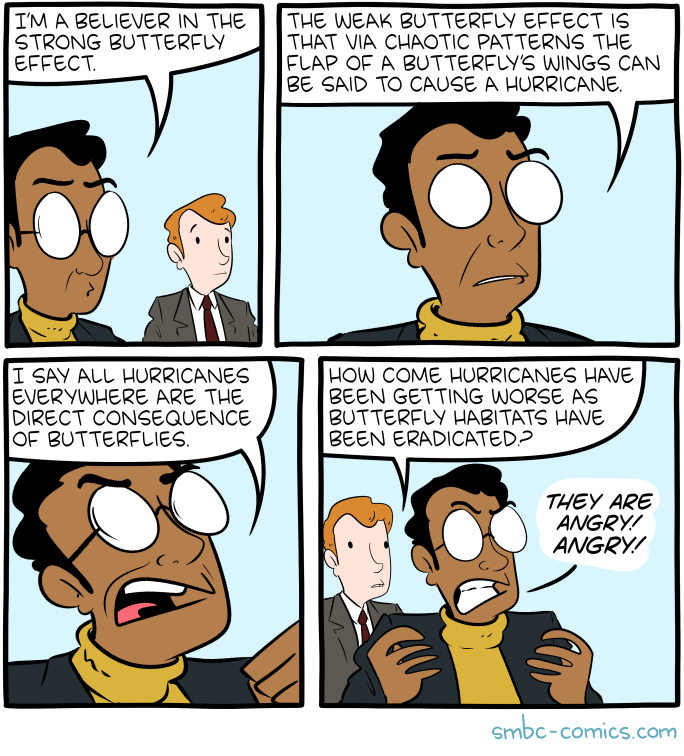
A person explains that they are a believer in the "strong butterfly effect" — the idea that tiny changes can have massive consequences. They explain the standard version: the flap of a butterfly's wings can cause patterns that lead to a hurricane. But then they define their "strong" version, which inverts the relationship: non-core hurricanes, which don't directly affect the butterfly's habitat, have made butterflies very angry.
The humor is in the absurd logical reversal. The butterfly effect in chaos theory is about how small causes (a butterfly flapping its wings) can lead to large effects (a hurricane). The "strong" version presented here flips it around, treating the butterflies as conscious agents who are personally offended by the hurricanes — as if the butterflies are aware of the causal chain and upset that storms they didn't intend to create are happening outside their territory.
The Humor
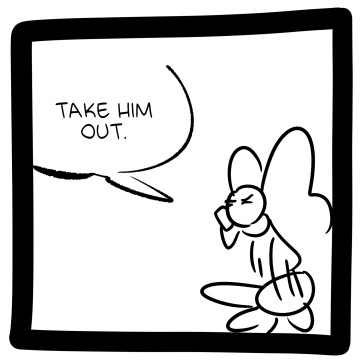
The joke plays on the common misunderstanding of the butterfly effect. Many people interpret the metaphor too literally, as if actual butterflies are somehow responsible for actual hurricanes. The comic takes this literal misreading to its logical extreme by imagining that the butterflies would then have opinions about the hurricanes. The final panel showing the butterflies declaring "THEY ARE ANGRY!" drives home the absurdity. It's also a parody of how people in general invent "strong" versions of scientific concepts that are really just garbled misunderstandings of the original.
References
The butterfly effect is a concept from chaos theory, popularized by meteorologist Edward Lorenz. His 1972 talk was titled "Does the Flap of a Butterfly's Wings in Brazil Set Off a Tornado in Texas?" It illustrates sensitive dependence on initial conditions in dynamical systems.