class-3
Explanation
The Joke
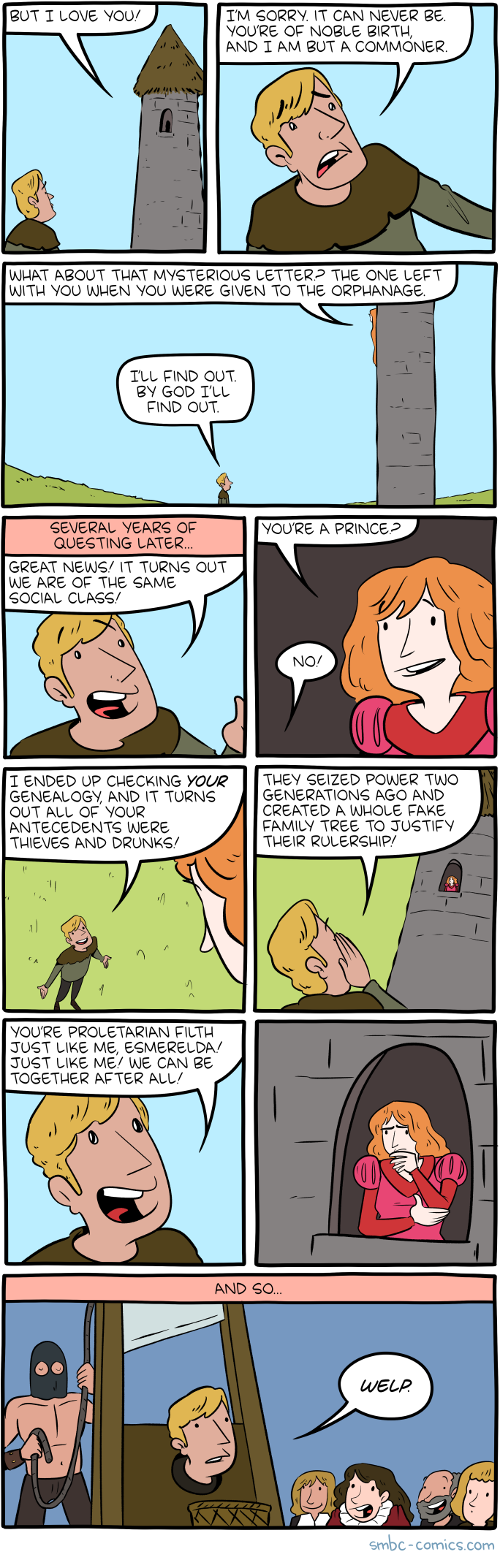
The comic plays out a classic fairy tale scenario: a young man approaches a tower where a woman is imprisoned, and she says she can never be with him because she is of noble birth and he is a commoner. He mentions a mysterious letter left with him as a baby at an orphanage — the standard setup for a "secret prince" reveal in fairy tales. He sets off to discover his true origins.
After "several years of questing," he returns with the news: he is indeed a prince. She is delighted. But then he reveals the catch — he investigated her genealogy too, and it turns out all of her ancestors were "thieves and drudges." Her family only seized power two generations ago, created a fake family tree, and executed historians to justify their rule. So she is the one who is actually common-born, not him.
The final panels show the now-deflated princess as the young man cheerfully declares she's "proletarian filth, just like me" and they can be together after all. She responds with a resigned "Welp."
The Humor
The comic subverts the fairy tale trope where the humble orphan turns out to be secretly royal, making the love match acceptable. Here, the subversion goes further: instead of elevating the commoner, it tears down the noble. The joke is that aristocratic lineages are often built on exactly this kind of fraud — seizing power through violence, fabricating genealogies, and destroying evidence. The young man's cheerful, earnest delivery of what amounts to a devastating exposé of her family's illegitimacy is funny precisely because he sees it as good news. The princess's reaction — trapped in her tower, confronted with the truth that her entire identity is a sham — is the punchline.
References
The comic satirizes common fairy tale and fantasy tropes, particularly the "hidden heir" plot device found in countless stories from King Arthur to Star Wars. It also touches on real historical practices: many noble families throughout history did fabricate genealogies and suppress contradictory evidence to legitimize their rule.