clusivity
Explanation
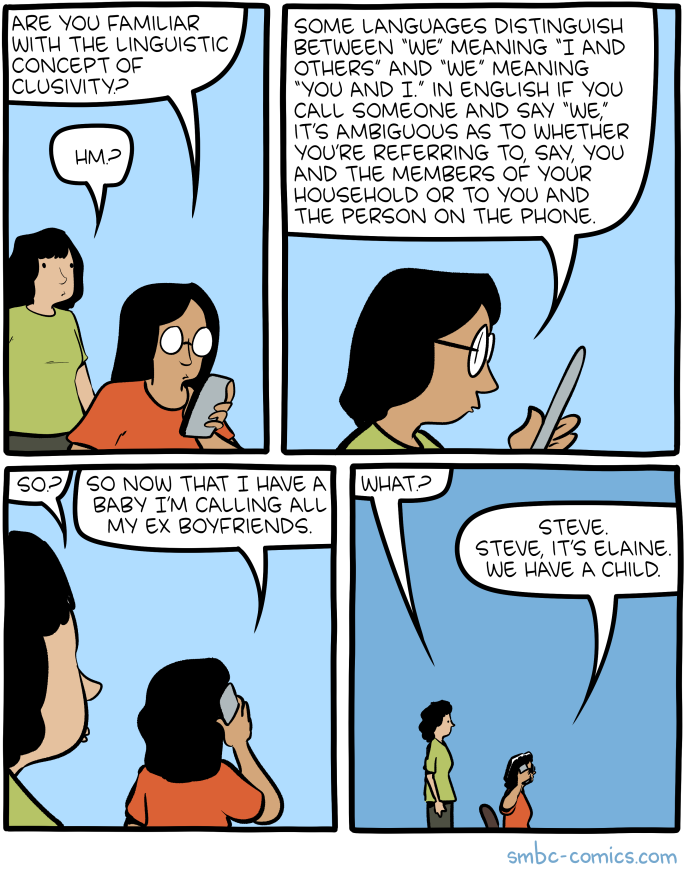
This comic is about the linguistic concept of clusivity -- the distinction some languages make between "inclusive we" (which includes the listener) and "exclusive we" (which excludes the listener).
In the first panel, a linguistics professor explains that some languages distinguish between "we meaning me and others" and "we meaning me and you." She notes that in English, "we" is ambiguous: it could mean "us including you" or "us but not you." She gives the example that it can be unclear whether "we" refers to one's entire household or just the speaker and someone else.
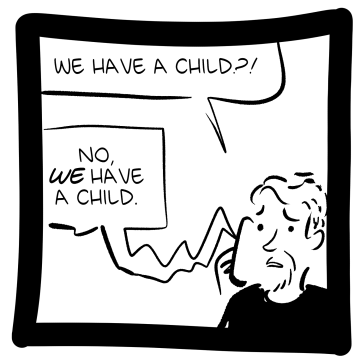
The humor arrives in the final panel, where a student uses this ambiguity for comedic effect. She says "So that's what I meant when I said 'we have to stop seeing my ex-boyfriends'" -- the joke being that the lack of clusivity in English allowed her to hide the fact that "we" excluded the person she was speaking to (likely a current partner), when it actually meant she and the ex-boyfriends needed to stop seeing each other. Another character responds with "Steve, it's Elaine. We have a child," highlighting how this ambiguity can cause real confusion in relationships.
The comic plays on how a seemingly dry linguistics topic -- pronominal clusivity -- maps onto everyday relationship drama and miscommunication.