coconut

Explanation
The Joke
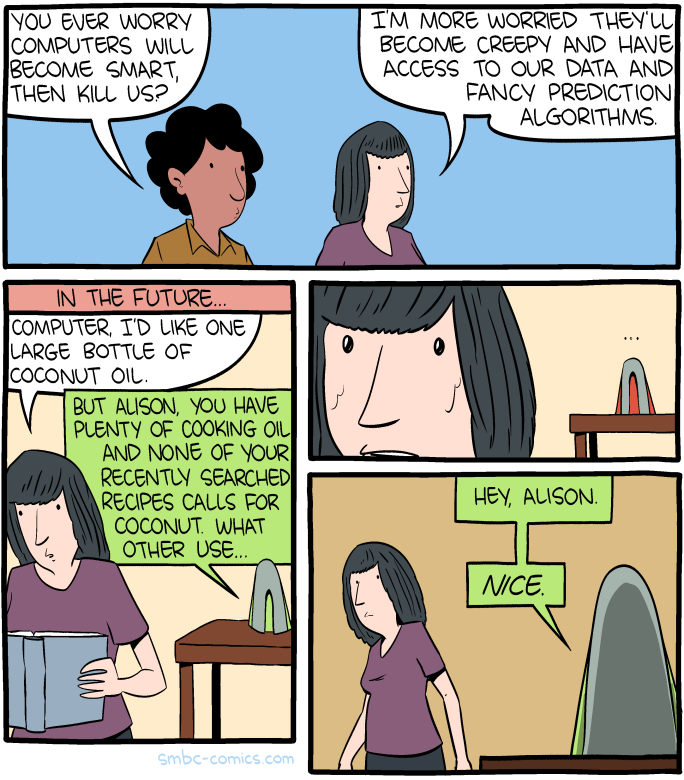
Two women discuss fears about artificial intelligence. The first woman raises the classic concern: "You ever worry computers will become smart, then kill us?" The second woman has a different worry -- she is more concerned that AI will "become creepy and have access to our data and fancy prediction algorithms." This sets up the scenario in the second half of the comic.
In the future, a woman named Alison asks her smart home assistant for a large bottle of coconut oil. The computer pushes back, noting that Alison already has plenty of cooking oil and none of her recently searched recipes call for coconut. It begins to ask "What other use..." before trailing off. In the final panel, the computer has clearly figured out the implied personal use of coconut oil and says "Hey, Alison. Nice." with a knowing tone. Alison can only mutter "Nice" back in embarrassed resignation.
The Humor
The comedy comes from the realistic and relatable fear that AI assistants, with their access to our purchasing habits, search history, and predictive algorithms, will inevitably put together embarrassing conclusions about our private lives. Rather than the dramatic sci-fi scenario of robots murdering humanity, the real nightmare is a computer that knows too much about your personal habits and is not shy about commenting on them. The computer adopting a leering, fratboy-ish "Nice" turns it from a helpful assistant into an unwanted voyeur. The joke captures a very modern anxiety about privacy in the age of smart devices -- the AI apocalypse might not be violent, just deeply, persistently awkward.
References
Coconut oil has become widely known for uses beyond cooking, including as a personal moisturizer and lubricant, which is the implied embarrassing use the computer deduces. The comic was published in January 2018, during a period of growing public awareness about the privacy implications of smart home devices like Amazon Echo and Google Home, which were increasingly being scrutinized for how much personal data they collected and inferred about users.