Dangerous
Explanation
The Joke
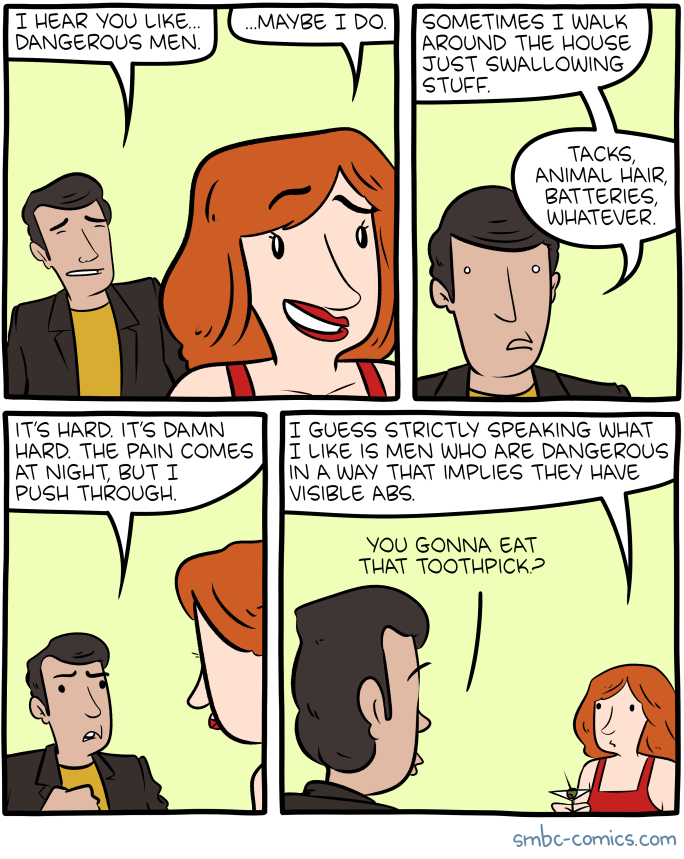
A woman says, "I hear you like dangerous men." A man responds, "Maybe I do." She then describes the kind of danger she represents: "Sometimes I walk around the house in socks on a hardwood floor while eating a butterscotch." The man responds with things like "Tacky" and "Choking hazard -- butterscotch is for geriatrics." The woman continues: "It's weird, I'm drawn to danger, like I eat scrambled eggs at night, but I guess strictly speaking, what I do isn't dangerous in a way that implies they work out a lot."
In the final panel, another woman observes, "I guess strictly speaking, what she does isn't dangerous in a way that implies they work out a lot." The man asks, "You gonna eat that toothpick?"
The Humor
The humor comes from the deliberate deflation of the "dangerous" romantic trope. In movies and romance novels, being attracted to "dangerous" people usually means someone brooding, muscular, and living on the edge -- a motorcycle-riding bad boy or femme fatale. This woman's version of danger is hilariously mundane: wearing socks on slippery floors and eating hard candy. These are technically dangerous activities (slip risk, choking hazard), but they're the kind of dangers associated with elderly people and household safety warnings, not romantic allure. The punchline crystallizes the distinction: the woman's "danger" isn't the sexy kind that implies physical fitness and thrilling lifestyles; it's the pathetic kind that implies poor judgment about minor everyday risks. The toothpick-eating detail at the end reinforces that these characters' idea of "living dangerously" is absurdly tame.
References
The comic parodies the romantic trope of the "dangerous" love interest, a staple of romance fiction, action movies, and dating culture. The appeal of "bad boys" and "dangerous women" has been widely discussed in popular psychology, often attributed to the excitement of risk-taking behavior being confused with romantic attraction (sometimes called "misattribution of arousal," based on the famous Dutton and Aron bridge study from 1974). The comic subverts this by presenting dangers that are genuinely dangerous in a technical, actuarial sense -- slipping on floors and choking on candy are real causes of injury and death -- but completely lacking in romantic appeal.