destiny-4
Explanation
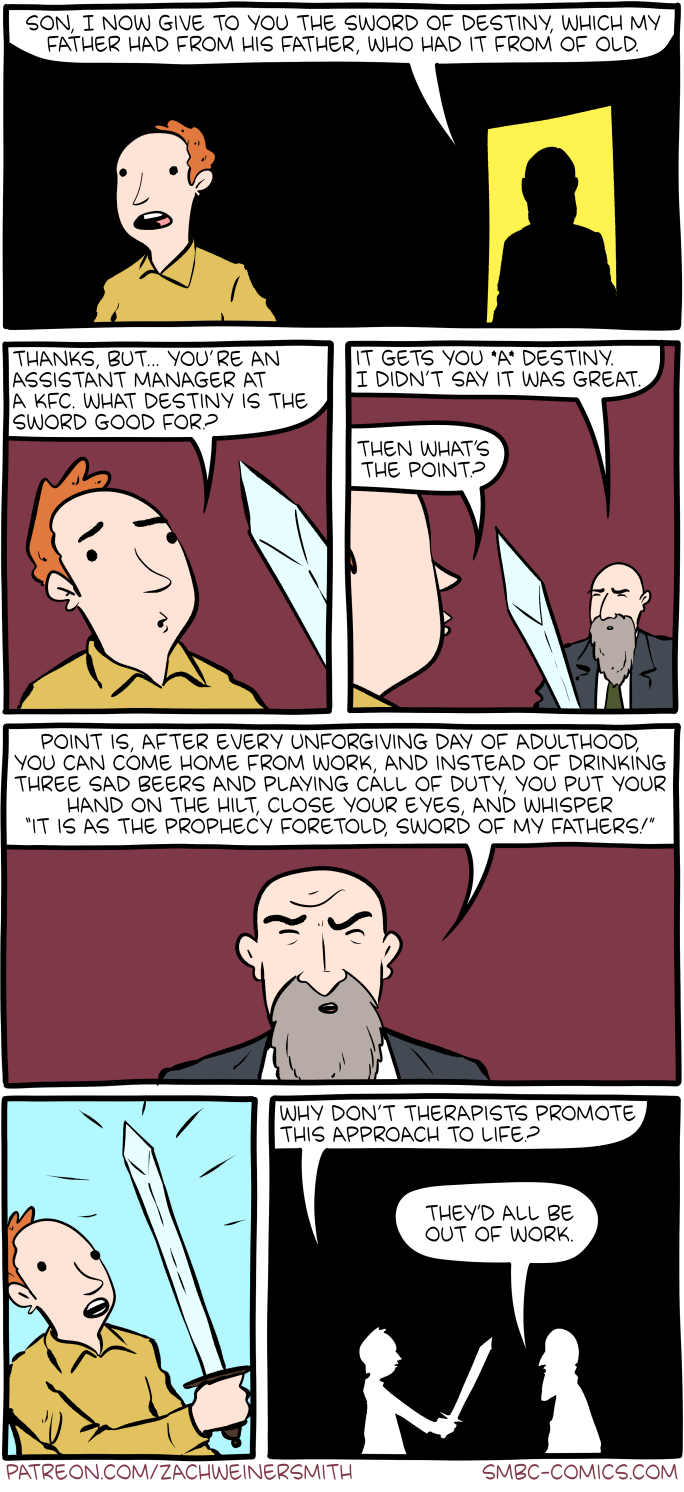
This comic is set in a fantasy scenario where an old wizard or sage presents a young adventurer with the "Sword of Destiny," explaining it was passed down from his father and originally came from God. The adventurer, however, is unimpressed: "Thanks, but... you're an investment manager at a mid-size firm. What does destiny in the classic sense mean?" The sage deflects: "I feel 'destiny' is great. I don't say it was great destiny."
When the adventurer asks "Then what's the point?", the sage delivers his real pitch: after a long, grinding day of drudgery, you come home from work and instead of drinking or watching TV, you put your "hand on the hilt, close your eyes, and whisper: it is the prophecy. Consider each bit of my anguish!"
The final panel shows someone asking "Why don't therapists promote this approach to life?" with the answer: "They'd all be out of work."
The humor works by transplanting the grandiose fantasy trope of a "chosen one" narrative into the mundane reality of modern middle-class life. The sword of destiny is not meant for slaying dragons but for coping with the existential tedium of office work. The joke suggests that the fantasy of having a grand destiny — even a completely fabricated one — is psychologically more effective than actual therapy, because what people really crave is not solutions to their problems but the feeling that their suffering has cosmic significance. It is a characteristically SMBC observation about how mythic narratives serve a deep psychological need that modern rational approaches to mental health cannot quite replicate.