Fast
Explanation
The Joke
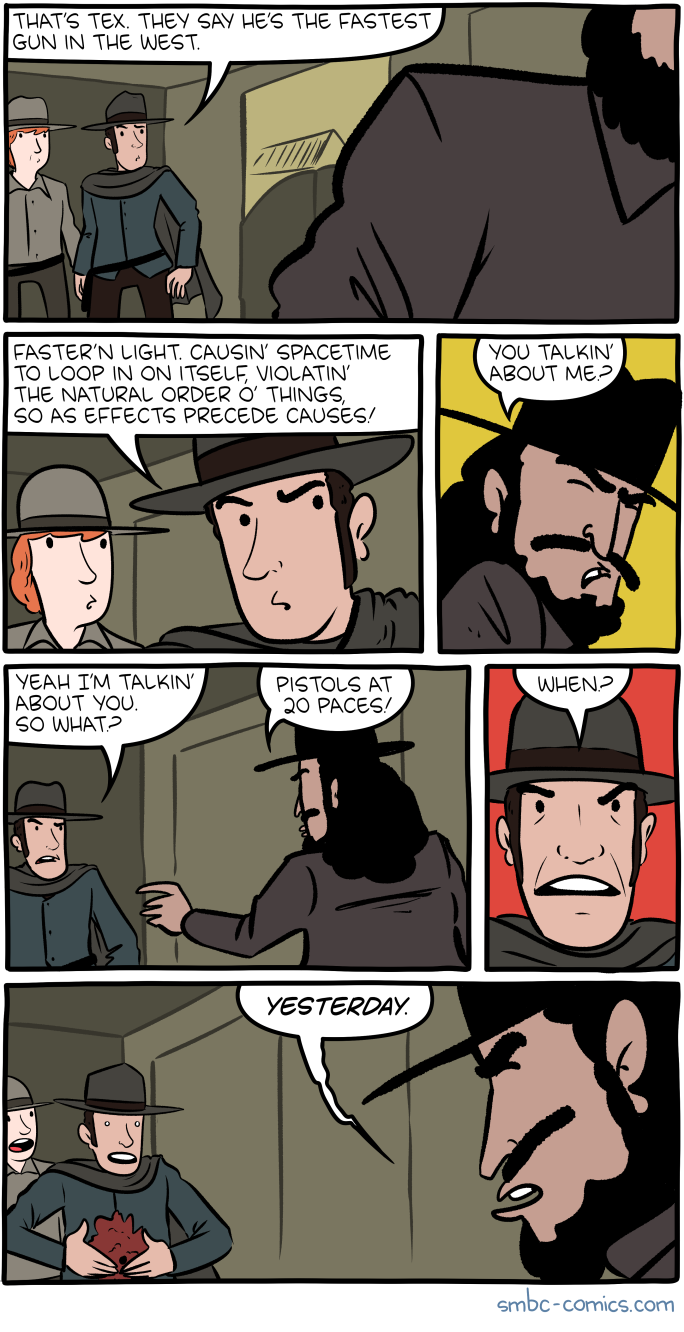
The comic is set in a Wild West saloon scene. A narrator introduces a gunslinger, saying "Sure, Tex, they say he's the fastest gun in the west." But Tex's boast is not about quick-draw speed -- it is about physics. He claims that Einstein's light-speed causality, spacetime structure, and the impossibility of faster-than-light travel mean that effects always follow causes, and therefore "precise causes" are possible. The other cowboys are confused: "You talking about me?" Tex says "Pistols at noon?" and the other man agrees: "Amen."
The punchline is in the final panel: a man lies shot dead on the ground, and a bystander asks when this happened. The answer: "Yesterday." Tex is so "fast" that the duel already happened before anyone even knew about it -- taken to an absurd literal extreme where his speed somehow violates the very causality he was lecturing about.
The Humor
The joke operates on the double meaning of "fastest gun." In Western lore, being the "fastest gun" means having the quickest draw. Tex instead interprets "fast" through the lens of relativistic physics, lecturing about the speed of light and causality. The punchline then subverts even this -- despite all his talk about how causality must be preserved, the duel apparently already happened "yesterday," as if Tex is so fast he transcends the very physical laws he was pontificating about. It is a layered absurdity: a cowboy physicist whose actual speed makes a mockery of his own lecture.
References
The comic references Einstein's special relativity, particularly the concept that the speed of light is the universal speed limit and that causality (cause must precede effect) is a fundamental consequence of this. The "light cone" structure of spacetime determines which events can causally influence which other events.