Feelings

Explanation
The Joke
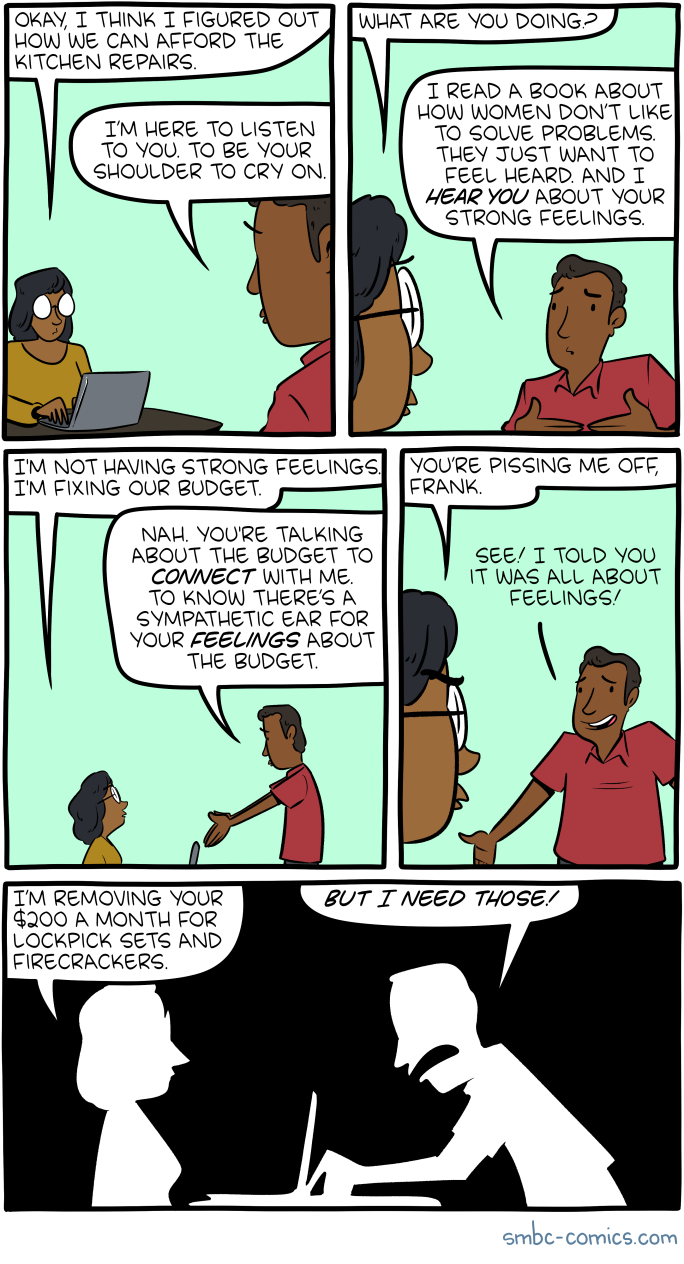
A woman is working on fixing something under the kitchen sink when a man arrives and announces he has read a book about how to solve problems in relationships by listening to your partner's feelings. He says he is there to listen and asks her to talk about her "strong feelings." The woman, clearly not in an emotional crisis but simply doing a practical repair, says she is not having strong feelings and is just fixing the kitchen faucet.
The man refuses to accept this, insisting that she must have deep feelings she needs to express. When she tells him he is "pissing her off," he triumphantly declares "Great! I told you it was all about feelings!" -- taking credit for the very emotional reaction he provoked through his pestering. The final panel reveals a darkly comic escalation: the woman says she is paying $200 a month for a plumber and a restraining order, implying the man's obsessive "emotional support" became so intrusive she had to get legal protection.
The Humor
The comic satirizes a specific type of person who reads one self-help book and then aggressively applies its lessons to everyone around them, regardless of context. The man is so committed to the framework of "it's all about feelings" that he creates the emotional problem he was supposedly trying to solve. The irony is perfectly constructed: he provokes anger through his unwanted emotional interrogation and then treats that anger as validation of his approach. The restraining order punchline escalates the situation to show just how harmful well-intentioned but tone-deaf "emotional support" can become.
References
The comic satirizes pop psychology and the self-help industry, particularly books that reduce complex relationship dynamics to a single framework (such as "active listening" or "emotional intelligence"). It also touches on the gendered dynamic where men sometimes try to "fix" women's emotions rather than addressing practical problems, ironically reversing the stereotype -- here the woman is the practical one doing repairs while the man is obsessed with talking about feelings.