filth
Explanation
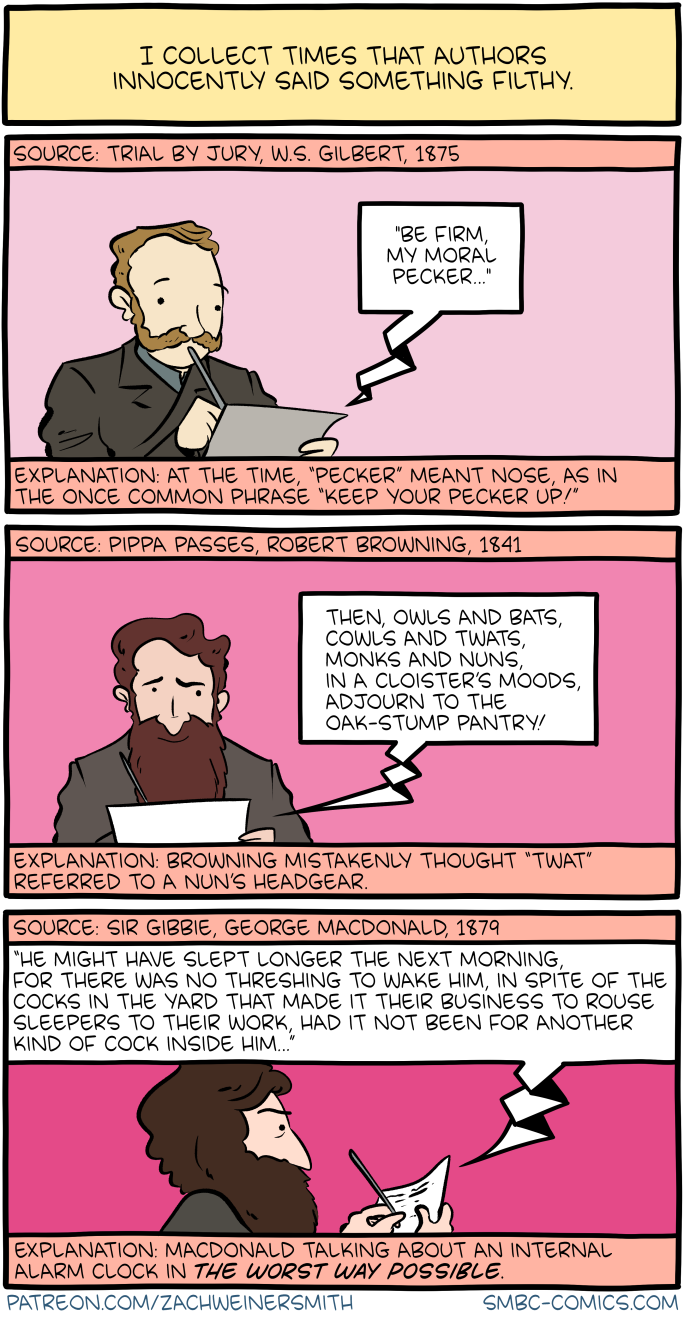
This comic presents a character who collects examples of times that authors innocently said something that sounds filthy to modern ears. It shows several historical literary quotes with explanations of what the words meant at the time.
The first quote is from "Trial" by W.S. Gilbert, 1875: "Be firm, my moral pecker!" with the explanation that at the time, "pecker" meant nose, in the sense of something that pecks, like a bird's beak.
The second is from Robert Browning, described as having read a work containing the word "twat" and, thinking it referred to a piece of clothing (possibly a nun's headgear), proceeded to use it in his own poetry as though it were an innocent term. The explanation notes that Browning mistakenly thought "twat" referred to an article of religious apparel.
The third example references another historical author who used a word or phrase that has since taken on a completely different (sexual or vulgar) meaning.
The humor works on the principle of historical linguistic drift -- words change meaning over time, and terms that were perfectly innocent in Victorian or earlier usage can sound shockingly vulgar today. The comic finds delight in the gap between authorial intent and modern interpretation. These are real historical examples: W.S. Gilbert genuinely wrote "be firm, my moral pecker" meaning "keep your chin up" (or more literally, "keep your nose/beak firm"), and Robert Browning really did misunderstand an obscene word and use it innocently in his poetry, which is one of the most famous anecdotes in English literary history.
The comic appeals to anyone who enjoys historical trivia and language humor, and it works because the quoted passages are genuinely, unintentionally hilarious to modern readers.