Foil

Explanation
The Joke
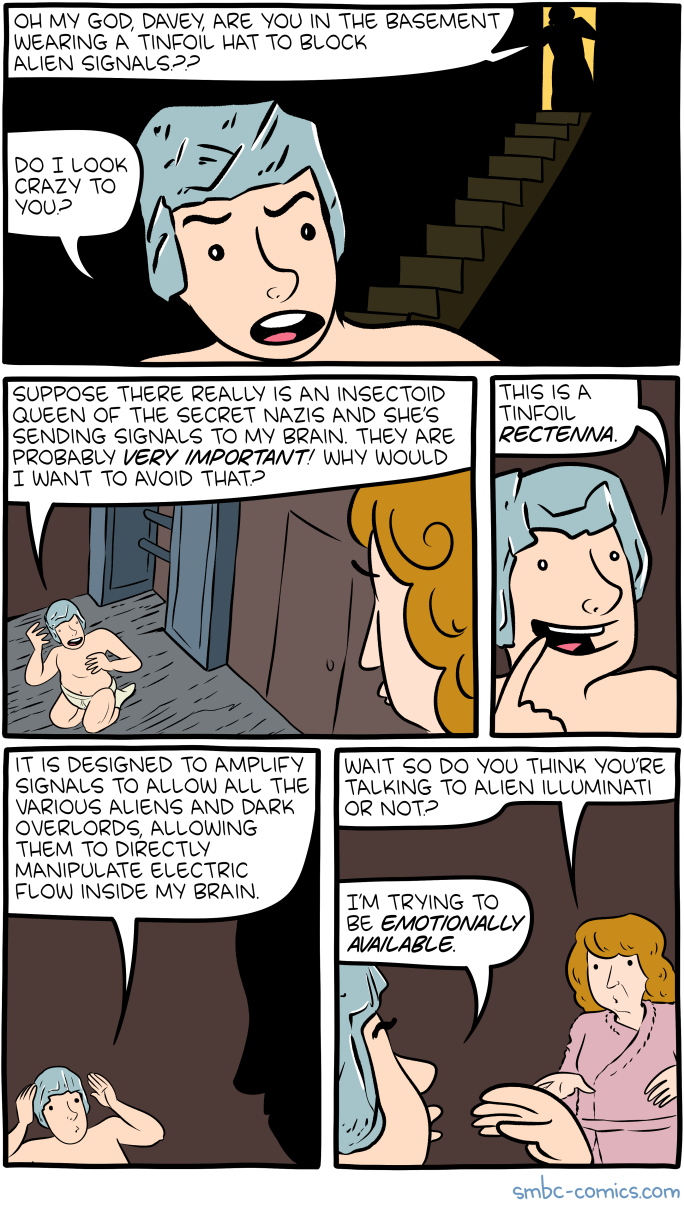
A man is in his basement wearing a tinfoil hat, and someone discovers him there. He explains that he's wearing the foil hat to block alien signals. When asked if he's crazy, he launches into an elaborate conspiracy: he claims to be an "heir to the Queen of the Secret Nation" and says aliens are sending signals that are "very important" and he "can't let them know." The other person asks, "So do you think you're a crazy person or not?" He responds that he's "trying to be emotionally available" — a complete non sequitur that has nothing to do with the conspiracy theories.
The Humor
The comic sets up a classic conspiracy theorist scenario — tinfoil hat, alien signals, secret royalty — and then subverts expectations. The punchline isn't about whether the conspiracy is real or not; it's about the character's total inability to engage with the actual question being asked. When confronted directly about whether he thinks he's crazy, he pivots to therapy-speak about being "emotionally available," suggesting he's absorbed self-help language without any of the self-awareness it's supposed to foster.
The joke operates on multiple levels: the absurdity of the conspiracy theory, the contrast between grandiose delusions and mundane relationship vocabulary, and the implication that "emotional availability" has become such a buzzword that even a delusional person in a tinfoil hat uses it as a deflection.
Broader Context
SMBC frequently juxtaposes extreme or absurd scenarios with mundane modern concerns. The comic satirizes both conspiracy thinking and the modern tendency to use therapeutic language as a shield against genuine self-reflection. The character has no problem believing he's secret royalty fighting aliens, but draws the line at honestly assessing his own mental state.