foraging
Explanation
The Joke
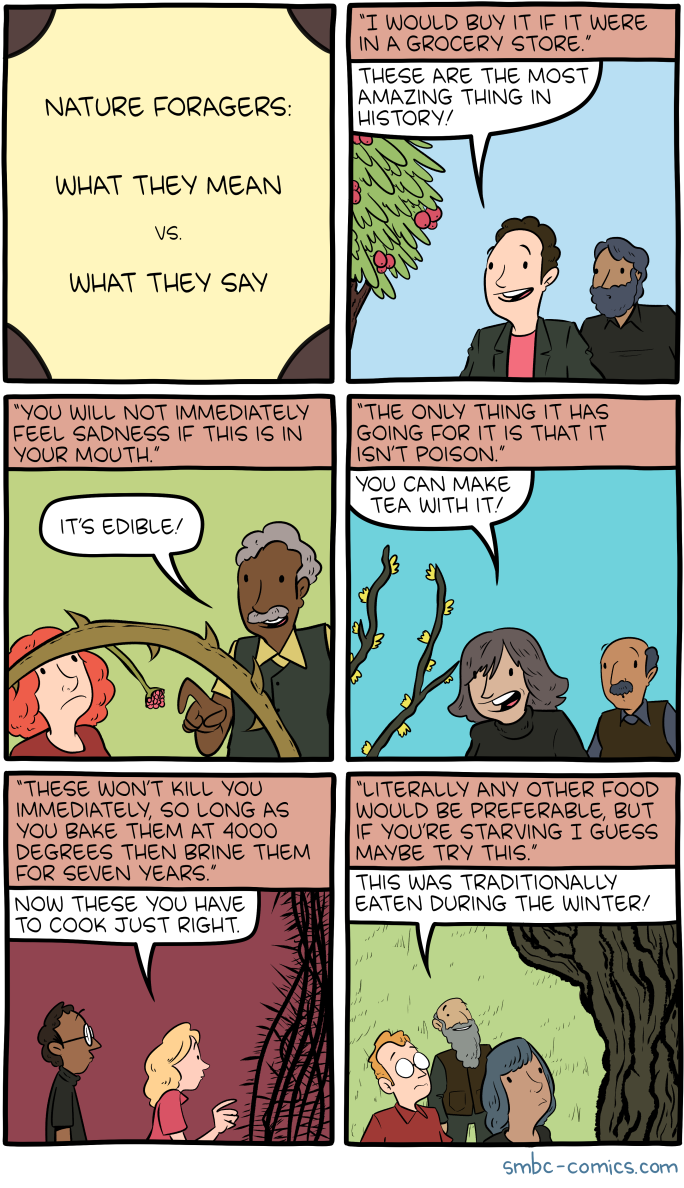
The comic is titled "Nature Foragers: What They Mean vs. What They Say." It presents a series of contrasts between the enthusiastic claims foragers make and the much less appealing reality behind them.
When a forager says "I would buy it if it were in a grocery store -- these are the most amazing things in history," what they actually mean is something far more modest. When they declare "It's edible!" what they really mean is "You will not immediately feel sick." When they say "You can make tea out of it!" the reality is that the only thing it does is turn water a slightly different color. And when they say a plant "was traditionally eaten during the winter," what they mean is that people ate it specifically because they were starving and had no better options.
The Humor
The comic skewers the romanticization of wild foraging culture, where enthusiasts often oversell the palatability and desirability of foraged foods. The gap between the forager's breathless endorsements and the mundane or even unpleasant reality is the engine of the comedy. "It's edible" being translated to "you will not immediately get sick" is particularly funny because it highlights how low the bar actually is -- technically, many things are "edible" in the sense that they will not kill you on the spot. The tea joke lands because it exposes the absurdity of calling something "tea" when all it does is slightly discolor hot water. The comic taps into a universal experience of being dragged along by an enthusiastic hobbyist whose passion far outstrips the actual quality of what they are sharing.
References
The comic reflects the growing popularity of wild foraging and the cottage industry of foraging guides, YouTube channels, and social media accounts that emerged in the 2010s. It plays on the broader cultural tension between a romanticized "return to nature" ethos and the practical reality that modern agriculture produces far tastier and more convenient food than most wild plants offer.