fungus
Explanation
The Joke
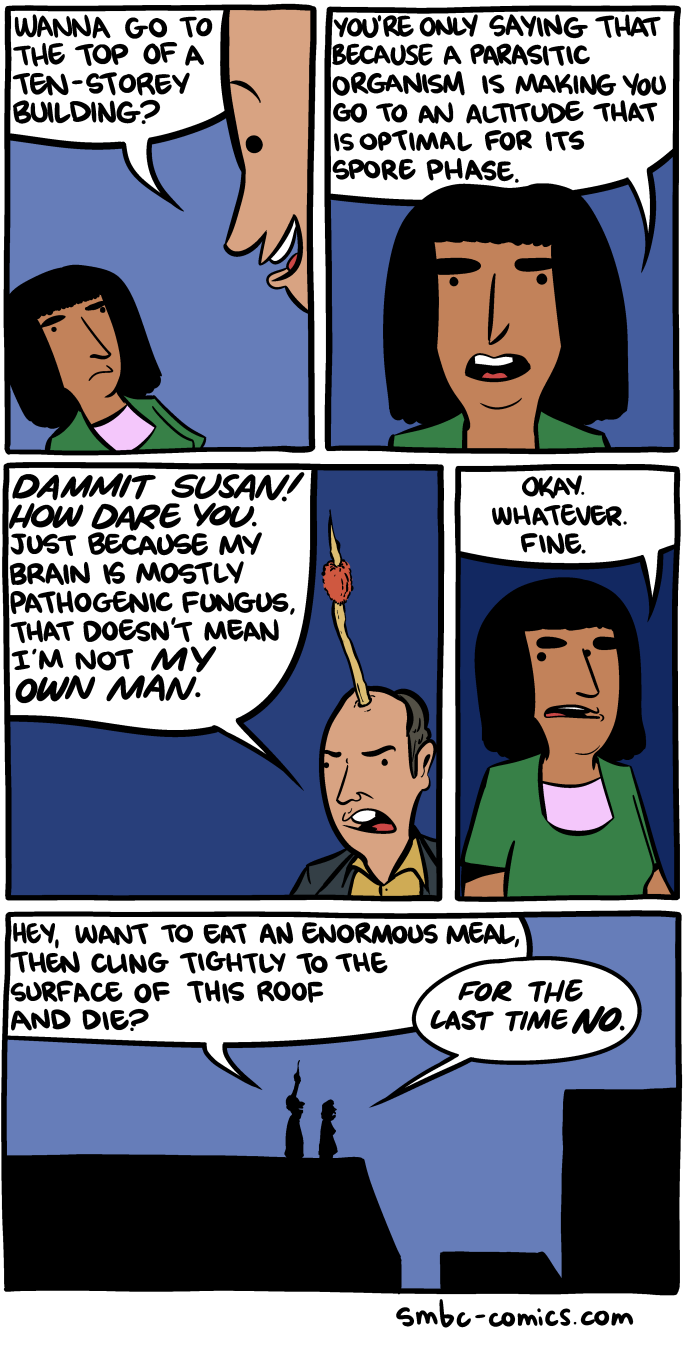
A man asks his friend "Wanna go to the top of a ten-storey building?" His friend replies: "You're only saying that because a parasitic organism is making you go to altitudes that are optimal for its spore phase." The man gets angry: "Dammit Susan! Just because my brain is mostly pathogenic fungus, that doesn't mean I'm not my own man." Then he says "Hey, want to eat an enormous meal, then climb topside to the surface of this road and die?" Susan replies: "For the last time, no."
The Humor
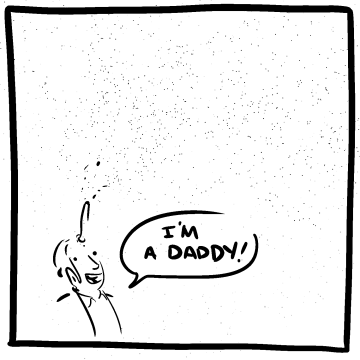
The comic is a riff on real-world parasites that manipulate their hosts' behavior for the parasite's own reproductive benefit. The most famous example is Ophiocordyceps unilateralis, a fungus that infects ants and compels them to climb to an elevated position before the fungus kills them and releases spores from the high vantage point. Here, Weinersmith imagines a human infected with a similar brain-controlling fungus. The first part is funny because the man insists on his free will and autonomy despite admitting his brain is "mostly pathogenic fungus." The final panel delivers the real punchline: his proposed activity (eat a big meal, climb to the surface of the road, and die) is exactly what a parasitized insect would do, revealing that the man is completely under the fungus's control while still insisting on his independence.
References
- Ophiocordyceps unilateralis: A parasitic fungus that infects ants, manipulates their behavior to climb to elevated positions, then kills them and sprouts a fruiting body from their heads to spread spores. This is sometimes called the "zombie ant fungus."
- Toxoplasma gondii: Another well-known behavior-manipulating parasite that infects rodents and makes them less afraid of cats (so they get eaten, allowing the parasite to complete its life cycle in the cat's gut). There is ongoing research into whether Toxoplasma affects human behavior as well.
- Zach Weinersmith's interest in parasites: Weinersmith's wife, Kelly Weinersmith, is a parasitologist, and parasitic manipulation of host behavior is a recurring theme in SMBC.