good-cop
Explanation
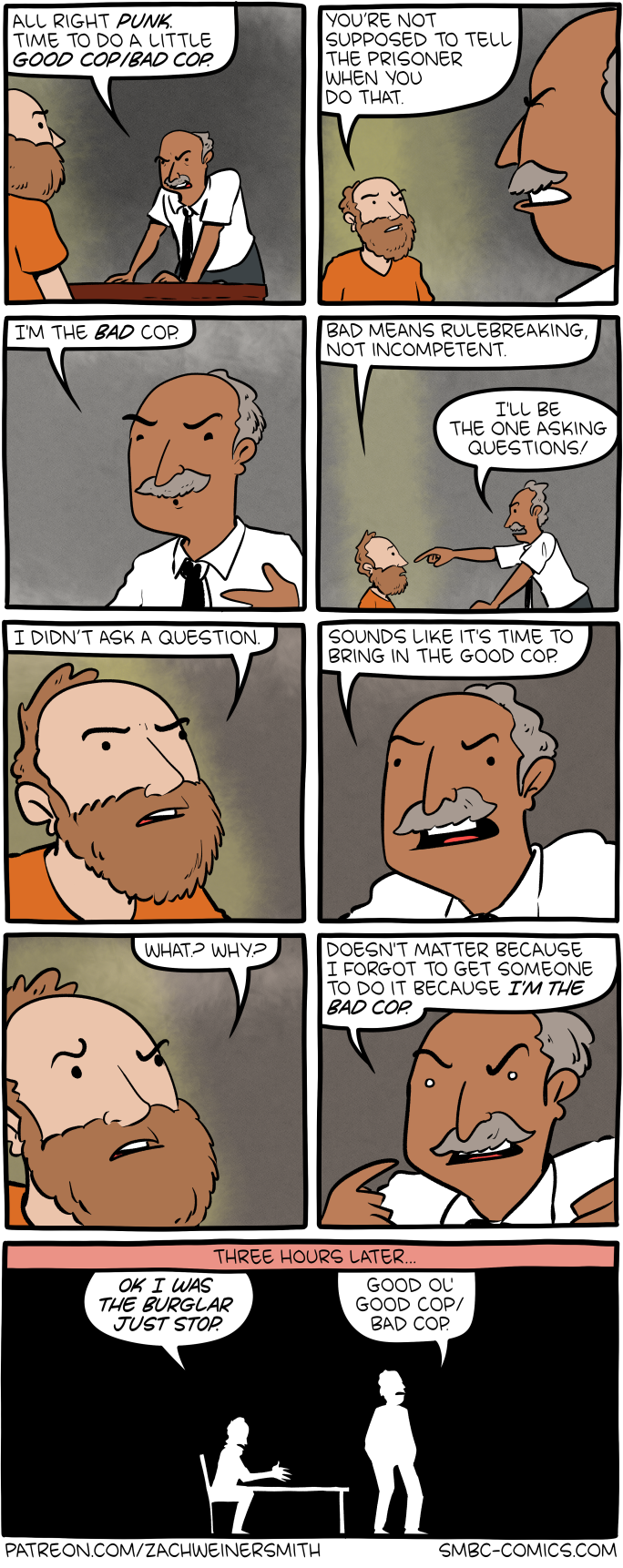
This comic is an extended riff on the classic "good cop, bad cop" police interrogation technique.
In the opening panel, one detective tells another: "Alright, it's time to do a little good cop, bad cop." His partner responds: "You're not supposed to tell the prisoner which one you are." This immediately establishes that these cops are bad at their jobs — the whole point of the technique is that the suspect shouldn't know it's a deliberate strategy.
The comic then spirals into an argument between the two cops about who gets to be which role. One declares "I'm the bad cop," to which the other responds with something like "That means rule-breaking, not being disrespectful." They bicker: "I'll be the one asking questions." "I didn't ask a question." "Sounds like it's time to bring in the good cop." The argument escalates as they fight over the roles, with one insisting he gets to do what he wants "because I'm the bad cop" — using the "bad cop" designation as a license for general bad behavior rather than as a specific interrogation strategy.
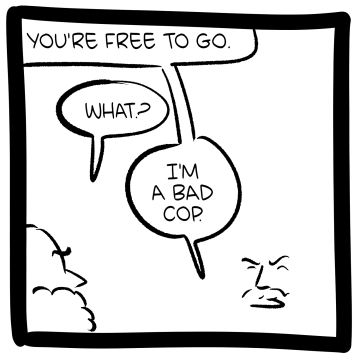
The final panel reveals the punchline: "Three hours later," the two cops are still arguing, and the prisoner suggests trying "good cop, good cop" just to get things moving. A caption or final image shows the suspect sitting alone, having been completely forgotten while the cops argued.
The humor works because the "good cop, bad cop" routine is one of the most well-known police tropes in popular culture, but this comic exposes the absurdity of the concept by showing what would happen if the cops themselves couldn't agree on the roles. The technique requires cooperation and coordination, which is ironic because the "bad cop" role inherently involves being uncooperative. The comic takes this contradiction to its logical extreme: if one cop is supposed to be difficult and confrontational, why wouldn't he also be difficult and confrontational with his own partner?
The alt-text adds another layer: "The other option is good cop, cop pretending to be a fish on the floor that keeps flopping around but won't die" — suggesting increasingly absurd variations on the interrogation technique.