hansel-and-gretel
Explanation
The Joke
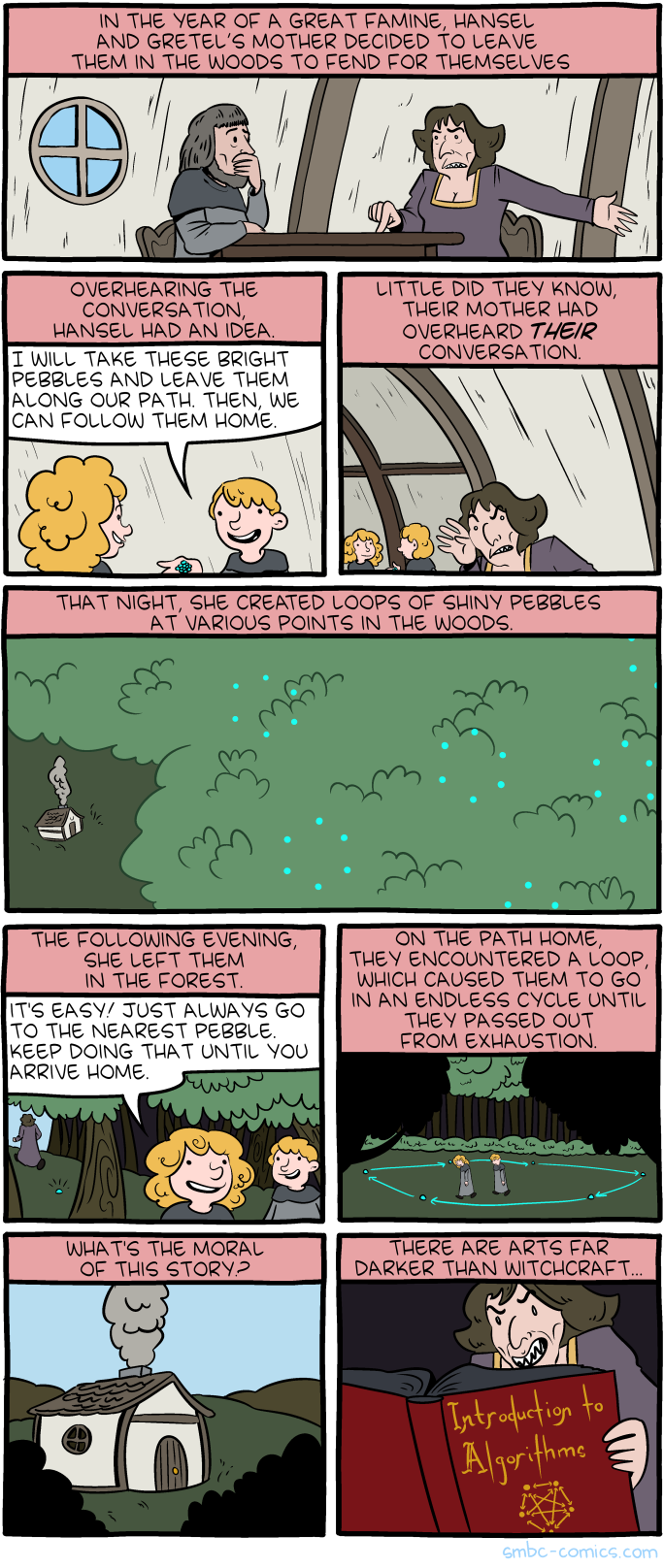
The comic retells the fairy tale of Hansel and Gretel, but replaces the magical elements with modern economic and strategic reasoning. In the original story, Hansel cleverly leaves a trail of breadcrumbs to find their way home from the forest. Here, the parents abandon the children in the woods during a famine, and the children overhear the plan. Gretel suggests leaving bright colored objects along the path so they can follow the trail home. But instead of a simple breadcrumb trail, the comic escalates into an elaborate scheme: the children discover the witch's gingerbread house and, rather than being captured, they devise a complex real-estate and economics-based plan. They talk about establishing a "food production loop" and exploiting the witch's resources in an endless cycle.
The final panel reveals the punchline with a caption suggesting this is the darker, more economically rational version of the fairy tale -- one where the children don't just escape but systematically exploit the situation like business consultants. The red-button joke ("Whitepaper by Happytime Inc.") implies the children have turned their scheme into a formal business proposal, satirizing the modern startup and tech-bro culture of turning everything into a monetizable venture.
The Humor
The humor comes from the jarring contrast between a children's fairy tale and cold, calculating economic rationalism. Instead of the innocent cleverness of the original Hansel and Gretel, these children approach their survival with the ruthless optimization of Silicon Valley entrepreneurs. The absurdity of small children producing a corporate whitepaper about exploiting a candy-house witch is the core comedic engine. It also satirizes how modern culture tends to reduce everything -- even fairy tales -- to economic models and optimization problems.
References
- The fairy tale "Hansel and Gretel" by the Brothers Grimm, in which two children are abandoned in the forest by their parents during a famine and discover a witch's house made of gingerbread.
- The "whitepaper" in the votey panel references the tech/crypto startup culture of publishing formal whitepapers to describe business ventures.