heritable
Explanation
The Joke
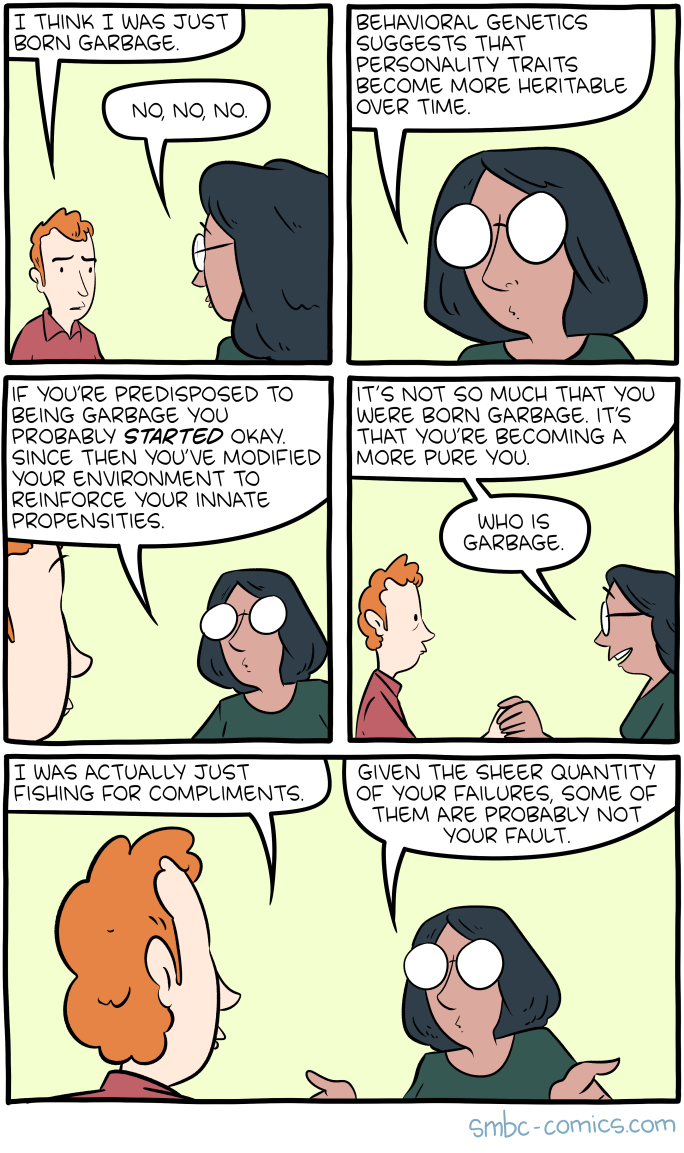
A conversation unfolds between several people about the nature of being "garbage." One person claims, "I think I was just born garbage," but another corrects them: behavioral genetics suggests that traits like being garbage actually become more heritable over time. A third person finds this encouraging, initially interpreting it as meaning they are not innately garbage but were shaped by environment. However, the correction continues -- if you are predisposed to being garbage, you will actually seek out environments that make you more pure garbage over time. The person is dismayed: "That is garbage."
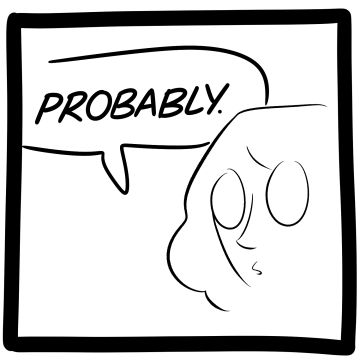
In the final panels, a woman observes that the original speaker "was actually just fishing for compliments," and the concluding panel notes that "given the sheer quantity of garbage in the preceding panels, them are probably not forthcoming."
The Humor
The comic takes the real finding from behavioral genetics -- that heritability of traits tends to increase with age as people select environments that reinforce their genetic predispositions (a concept related to gene-environment correlation) -- and applies it to the absurd trait of being "garbage." The humor lies in how a genuinely interesting scientific insight is used to deliver increasingly devastating news to someone who was hoping for reassurance. Each attempt to find a silver lining is met with a darker implication.
The meta-joke at the end adds another layer: the person was not even genuinely despairing but was fishing for compliments (hoping others would say "You're not garbage!"), and the conversation went so far off the rails into actual behavioral genetics that no compliments were ever delivered.
References
- Behavioral genetics and heritability: Research shows that the heritability of many traits (like intelligence and personality) increases with age. This is partly because as people gain more autonomy, they increasingly select environments that match their genetic predispositions, a phenomenon known as active gene-environment correlation.