hook
Explanation
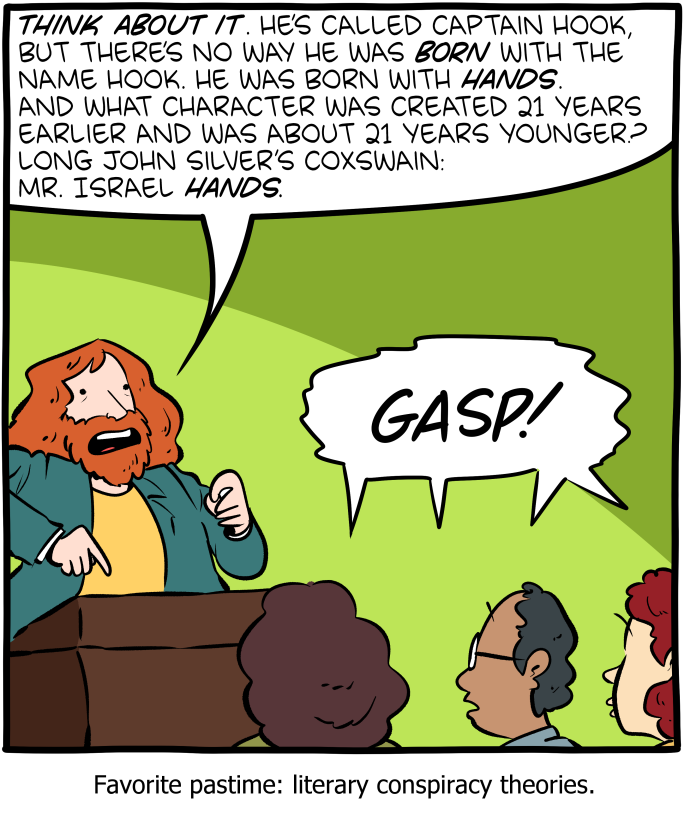
The comic shows a person at a podium presenting a "literary conspiracy theory" to a small audience. The theory: "Think about it. His name is Captain Hook. But there is no way he was born with the name Hook. He was born with hands. And what character was created 10 years earlier and was about 21 years younger? Long John Silver. Coincidence? Mr. Israel Hands." The audience gasps.
The humor here is a parody of conspiracy theory culture -- specifically, the style of conspiratorial thinking that draws dramatic connections between unrelated facts and presents them as if they constitute a shocking revelation. The speaker is applying the rhetorical techniques of conspiracy theorists (dramatic pauses, leading questions like "Coincidence?", connecting unrelated data points) to characters from classic adventure literature. Captain Hook is from J.M. Barrie's "Peter Pan" (1904), and Long John Silver and Israel Hands are from Robert Louis Stevenson's "Treasure Island" (1883). The "theory" implies some sinister connection between these fictional pirates, but the connections are meaningless -- they are characters from entirely different books by different authors.
The caption, "Favorite pastime: literary conspiracy theories," frames this as a hobby, suggesting a community of people who apply conspiratorial logic to fiction. The joke also plays on the absurdity of applying real-world investigative logic to fictional characters who were deliberately constructed by their authors -- of course Captain Hook's name is symbolic rather than his birth name, because he is a made-up character in a children's story.