ilium
Explanation
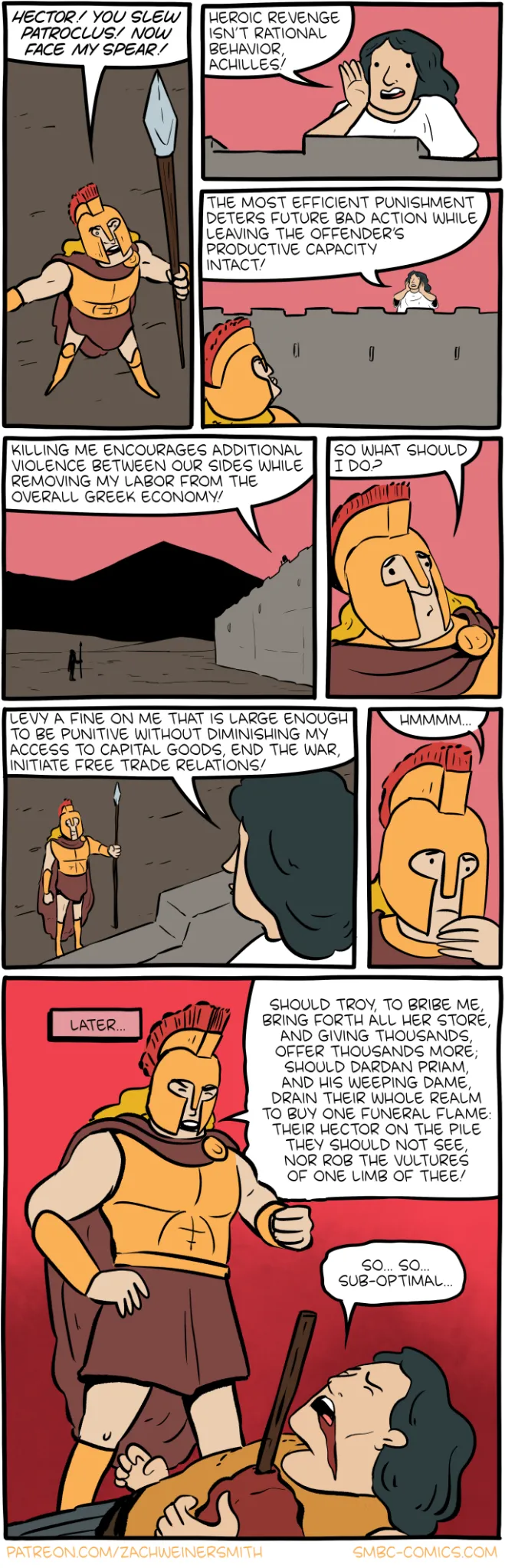
This comic reimagines the Trojan War through the lens of modern economics and rational negotiation. After Hector kills Patroclus, a character (likely Achilles or a Greek advisor) suggests that rather than simply seeking revenge, "the most efficient punishment would be one that compensates the victim's family while bearing the offender's capacity to offend intact" -- essentially proposing restorative justice with economic incentives.
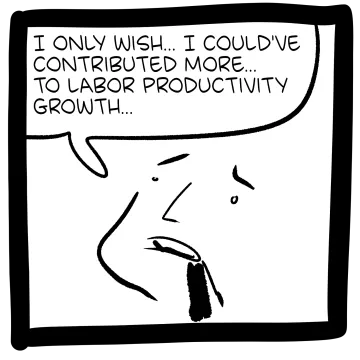
The conversation escalates into increasingly elaborate economic proposals: encouraging additional violence because it creates jobs, demanding Troy's capital goods, ending the war, and establishing free trade. The final panel shows someone presenting an impossibly detailed economic settlement to Troy, which includes handing over thousands of gold pieces, olive orchards, and placing "Hector on the pile" -- but the Greeks apparently find this deal so rational they can't refuse. The last line is a deflated "Go... go, Iliad Optimal."
The title "ilium" refers to Ilium, the Latin name for Troy. The humor satirizes the tendency of economists and rationalists to reduce all human conflicts -- even the epic, emotionally driven Trojan War -- to optimization problems. The Iliad is fundamentally a story about rage, honor, grief, and the human cost of war, so reframing it as a negotiation about capital goods and trade agreements is inherently absurd. The pun "Iliad Optimal" (playing on "Pareto optimal" or similar economics jargon) perfectly captures the comic's point: that some human experiences resist reduction to economic efficiency.