ilium
Explanation
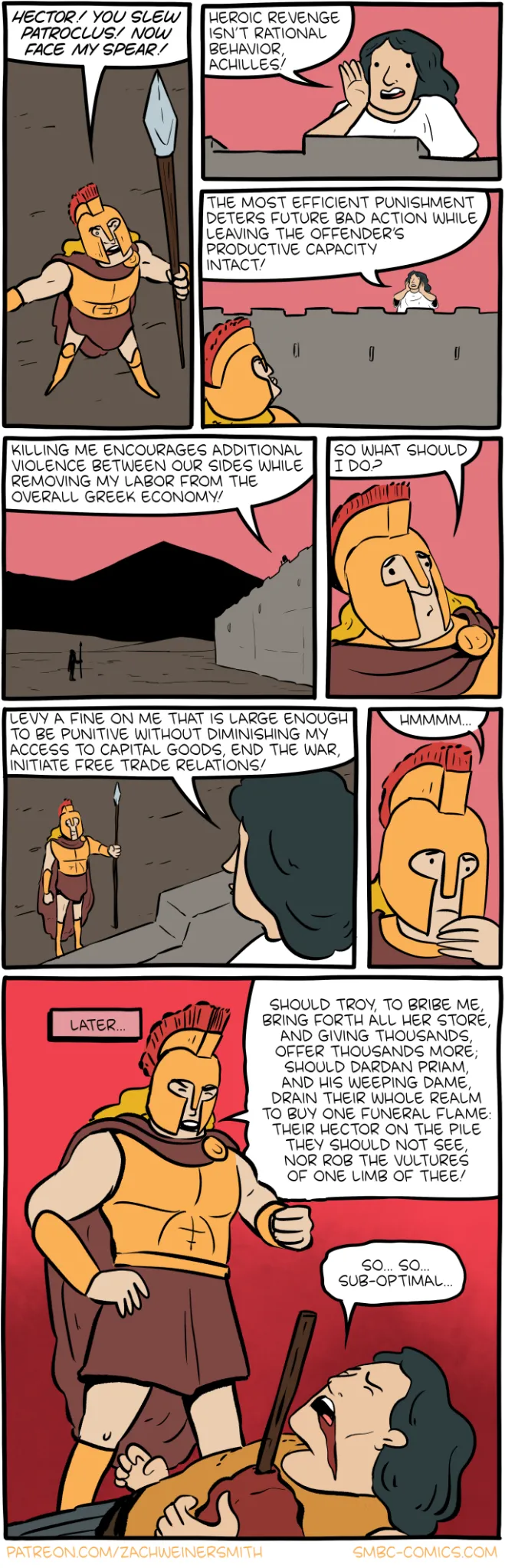
This comic reimagines the Iliad -- specifically the conflict between Achilles and Hector and the fate of Troy -- through the lens of modern economic rationality and cost-benefit analysis.
The comic opens with a scene from Homer's Iliad: Achilles has killed Hector, and someone (likely Priam or another Trojan) asks about revenge. The response invokes not martial honor but economic reasoning: rather than simply fighting back, the most efficient punishment would involve "making the offender's group bear costs that reduce their capacity" -- essentially, an economic sanction rather than a military one. There is discussion of whether violence encourages "additional violence" and whether Achilles's killing reduces "my value from the overall supply-side economy."
When someone suggests the expected heroic response, the economist-warrior dismisses it with cold rationality. There is a panel with the word "Hmmmmm" as someone considers the implications. The dialogue references "a tune of epic that is large enough to trade" and discusses "access to capital goods."
The joke culminates in a final panel labeled "Later" where, instead of the dramatic fall of Troy, we see what appears to be a mundane resolution: someone offers to "bring me gifts" and there is negotiation over trade terms -- "offer thousands more" and references to economic deals. The grand tragedy of the Trojan War has been reduced to a business transaction.
The title "ilium" refers to Ilium, the Latin name for Troy, and the root of the title "Iliad." The comic's humor comes from the jarring contrast between the epic, emotional, honor-driven world of Homeric poetry and the cold, calculating language of modern economics. In the Iliad, Achilles drags Hector's body behind his chariot out of grief and rage over Patroclus's death; in this version, someone would instead calculate the optimal economic response to the loss of a valuable military asset.
The comic satirizes the tendency in modern discourse to reduce all human conflicts and emotions to economic calculations. It suggests that while economic reasoning might be "rational," applying it to situations of deep personal loss and cultural meaning strips them of everything that makes them human -- and makes for a much less interesting epic poem. The final anti-climactic resolution (negotiated trade deal instead of the burning of Troy) is deliberately bathetic, showing that pure economic rationality produces outcomes that are efficient but narratively and emotionally empty.