juliet
Explanation
The Joke
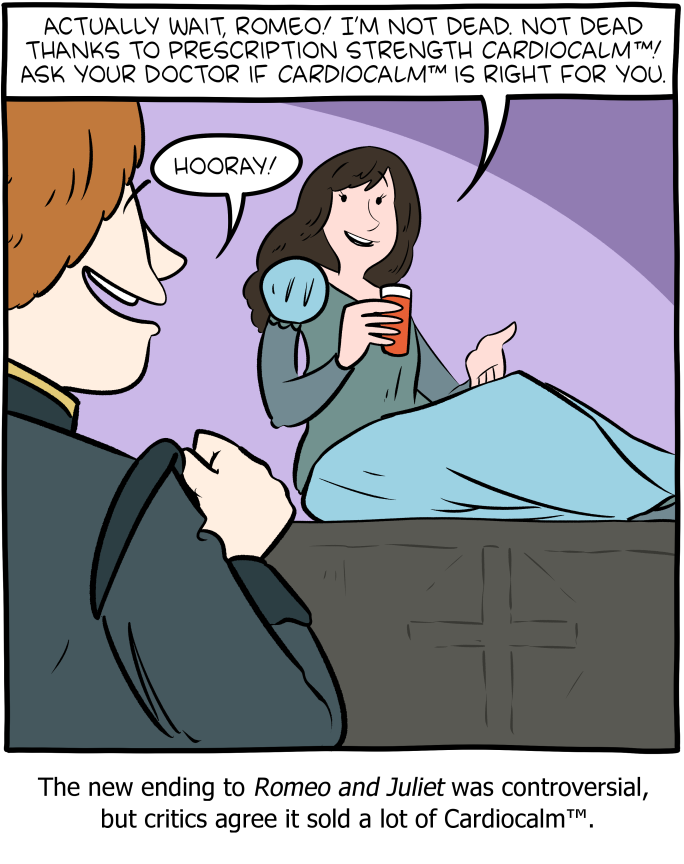
The comic reimagines the tragic ending of Shakespeare's Romeo and Juliet. In the original play, Juliet takes a potion that makes her appear dead; Romeo, believing she has truly died, kills himself, and Juliet then wakes up and kills herself in turn. Here, Juliet wakes up from her apparent death and immediately launches into a pharmaceutical advertisement, declaring she's "not dead" thanks to "prescription strength Cardiocalm," complete with the trademark symbol and the classic TV-ad disclaimer "ask your doctor if Cardiocalm is right for you." Romeo exclaims "Hooray!" while she holds what appear to be a pill and a drink.
The caption below notes that "the new ending to Romeo and Juliet was controversial, but critics agree it sold a lot of Cardiocalm." This frames the rewrite as a corporate product placement deal that has literally altered one of the most famous works in Western literature, sacrificing artistic integrity for pharmaceutical sales.
The Humor
The comedy works on multiple levels. First, it takes the most famously tragic ending in all of literature and turns it into a cheesy infomercial moment, which is inherently absurd. Second, it satirizes the modern tendency to insert advertising and product placement into every form of media, taken to its logical extreme: if we can put ads in movies and TV shows, why not retrofit them into Shakespeare? The deadpan caption suggesting that critics accepted the butchering of a masterpiece because it "sold a lot of Cardiocalm" is a wry comment on how commercial success tends to override artistic objections in modern culture.
References
- Romeo and Juliet by William Shakespeare, specifically the final scene in which both lovers die due to a misunderstanding involving a sleeping potion.
- The format of American direct-to-consumer pharmaceutical advertisements, which are required to include the phrase "ask your doctor if [product] is right for you."