like-that
Explanation
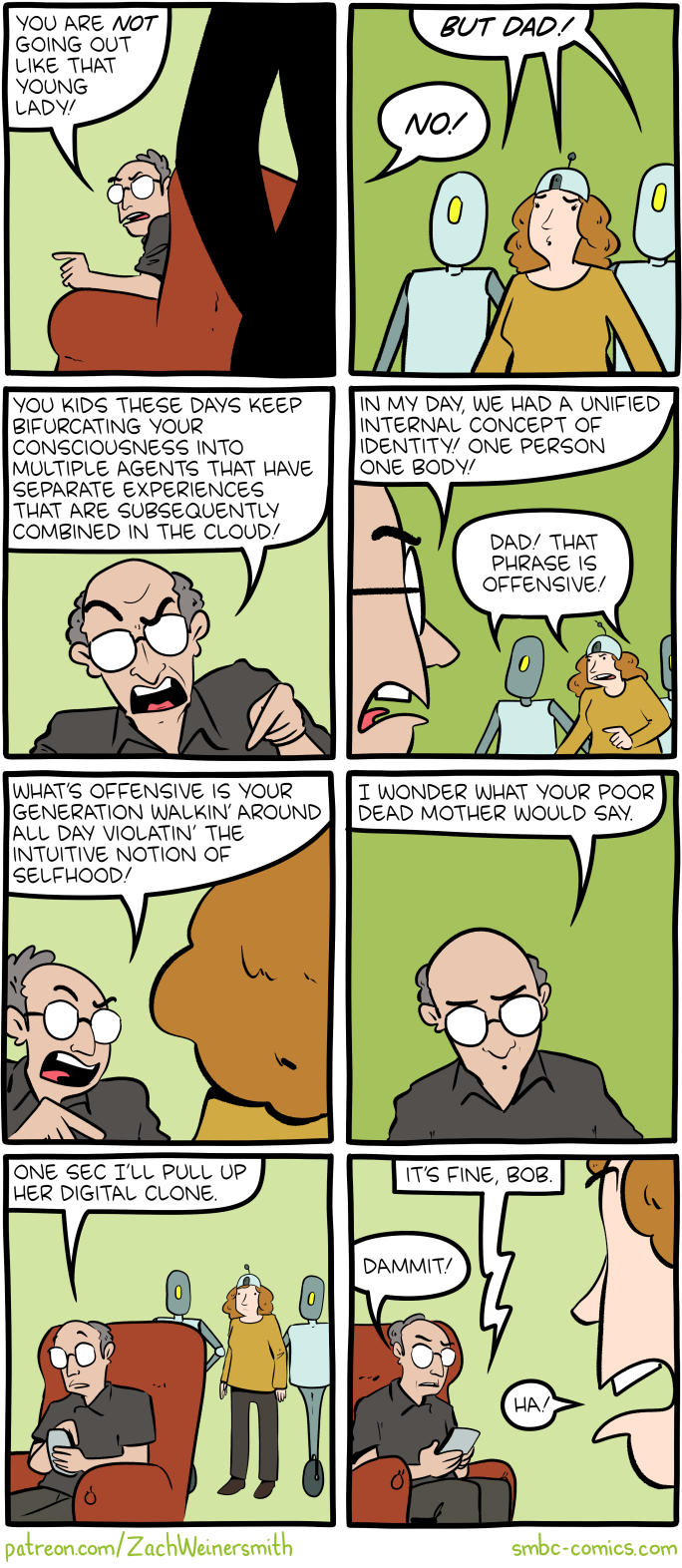
This comic plays on generational conflict around the concept of personal identity in a future where digital clones and multiple AI agents are commonplace.
An older man scolds his child for "going out like that," echoing the classic parental disapproval of a younger generation's choices. But the twist is that instead of complaining about clothing or hairstyles, the father is upset that young people keep "branching" their identities into multiple agents that have separate experiences and are "subsequently combined." He nostalgically recalls that "in my day, we had a unified, singular concept of a self -- one person, one body."
The child protests that the father's attitude is "offensive," mirroring how younger generations push back against older people's discomfort with evolving social norms. The father then wonders what "your poor dead mother would say," and the child reveals that they actually still have her digital clone. The father's response -- "Dammit" -- shows that even he can't escape the new reality he's complaining about, and that digital immortality has made his rhetorical appeal to the dead meaningless.
The humor works on multiple levels: it maps a very recognizable parent-child dynamic (generational disapproval, appeals to tradition, invoking deceased relatives) onto a wild sci-fi premise, making the futuristic scenario feel absurdly mundane. It also satirizes how every generation's moral panics about identity and selfhood follow the same script regardless of how exotic the actual technology becomes.