literary
Explanation
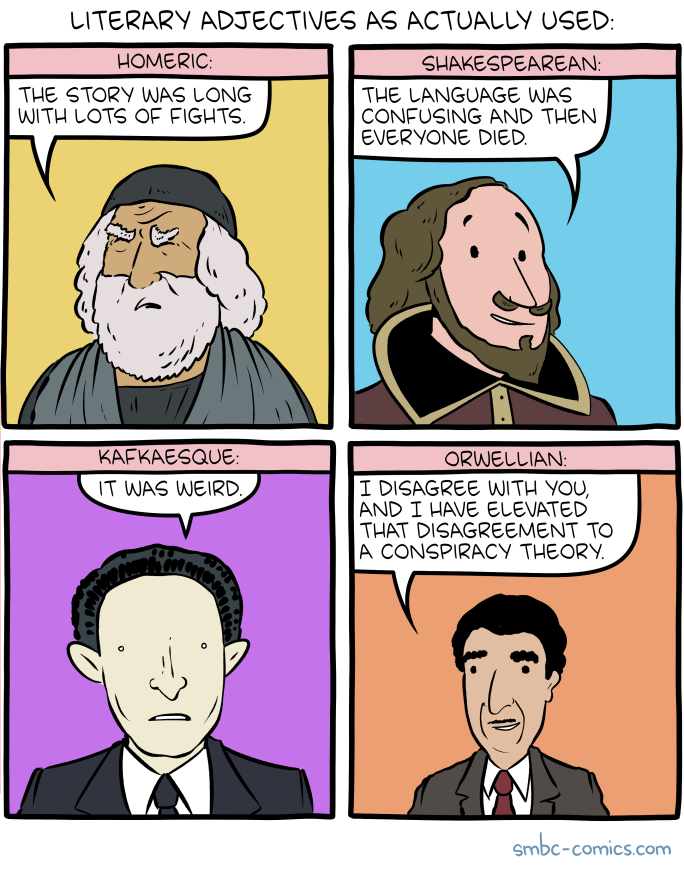
This comic humorously redefines famous literary adjectives (Dickensian, Shakespearean, Kafkaesque, Orwellian) based on how people actually use or misuse them in everyday conversation.
The title reads "Literary Adjectives as Actually Used."
-
"Dickensian" is shown with a caricature of Charles Dickens and defined as: "The story was long with lots of fights." This reduces Dickens' complex social commentary about poverty and class to the most superficial description of his novels -- they are long and contain conflict.
-
"Shakespearean" shows Shakespeare and is defined as: "The language was confusing and then everyone died." This boils down Shakespeare's works to their two most commonly complained-about features: archaic language and tragic endings.
-
"Kafkaesque" shows Franz Kafka with the definition: "It was weird." This strips away Kafka's nuanced exploration of bureaucratic absurdity, alienation, and existential dread, reducing it to a single dismissive adjective.
-
"Orwellian" shows George Orwell and is defined as: "I disagree with you and am upgrading that disagreement to a conspiracy theory." This skewers the modern overuse of "Orwellian" to describe any situation someone finds objectionable, regardless of whether it actually involves surveillance, authoritarianism, or propaganda.
The humor comes from the gap between what these literary adjectives are supposed to mean and how they are deployed in casual conversation. Weinersmith suggests that literary references in everyday speech function more as vague intensifiers than as precise critical terms, and that invoking a famous author's name often reveals more about the speaker's superficial familiarity than any genuine engagement with the work.