meaning-3
Explanation
The Joke
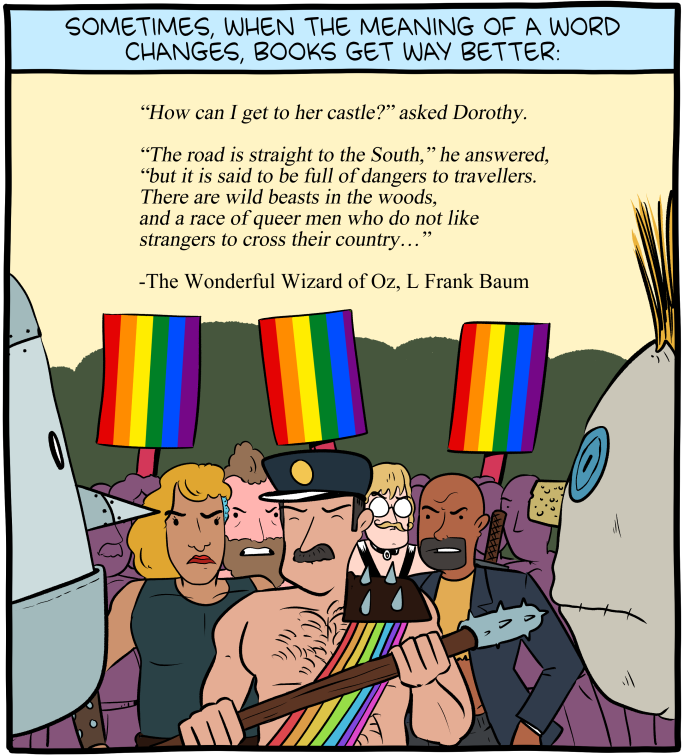
The comic presents the header text: "Sometimes when the meaning of a word changes, books get way better." Below this, a group of people -- depicted in colorful, modern clothing and appearing to be at a Pride parade or similar celebration -- are shown alongside a quote from L. Frank Baum's "The Wonderful Wizard of Oz" (1900). The quote reads: "How can I get to her castle?" asked Dorothy. "The road is straight to the South," he answered, "but it is said to be full of dangers to travellers. There are wild beasts in the woods, and a race of queer people who do not like strangers to cross their country."
The word "queer" in the original text simply meant "strange" or "peculiar," which was its common usage in 1900. Over the past century, the word has been reclaimed as an identity term for LGBTQ+ people. The comic imagines a reader encountering the passage with the modern meaning, transforming a dangerous warning about hostile strangers into a description of a fabulous community that Dorothy is about to stumble into.
The Humor
The comedy comes from the jarring recontextualization. Baum wrote an innocent children's fantasy where "queer" meant "odd and unfriendly," but reading it through a modern lens turns the Land of Oz into something far more colorful and welcoming than Baum intended. The illustration drives the joke home by depicting the "queer people" as a vibrant, celebratory crowd rather than menacing forest dwellers. The phrase "do not like strangers to cross their country" also takes on a funnier, more sassy tone when read this way -- less a dire warning and more a statement of fabulous territorial pride.
References
- "The Wonderful Wizard of Oz" (1900) by L. Frank Baum, Chapter 12: "The Search for the Wicked Witch."
- The semantic shift of the word "queer" from meaning "strange/peculiar" (19th-early 20th century usage) to its modern use as an umbrella term for LGBTQ+ identities, particularly following its reclamation beginning in the late 1980s and 1990s.