mime-2
Explanation
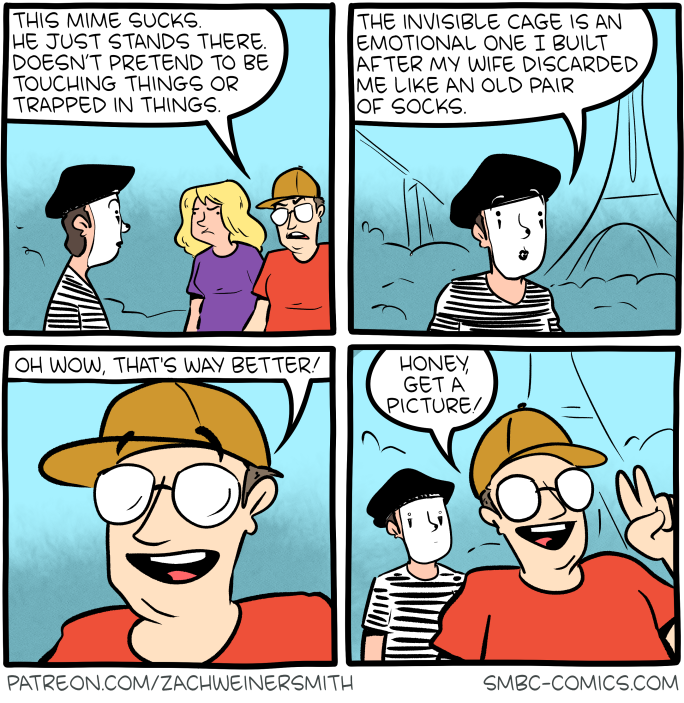
This comic humorously reimagines the traditional mime performance by applying it to emotional and social contexts rather than physical ones.
In the first panels, a street mime performer is described: rather than doing the classic physical mime acts (being trapped in an invisible box, touching invisible things), this mime performs "emotional" or "invisible" scenarios. The mime's invisible cage is described as "emotional" -- "one I built over a lifetime of mistakes and regrets, one like an old pair of broken-in shoes" or similar -- transforming the mime's classic "trapped in a box" routine into a metaphor for emotional baggage and psychological walls people build around themselves.
A spectator reacts: "Oh wow... that's way better." The audience appreciates this emotional mime more than traditional mime because it resonates with their actual lived experience. Someone responds with "Where's your actual circus?" or similar, suggesting this is more compelling than standard entertainment.
The comic works on multiple levels. It satirizes both the traditional mime (whose physical illusions are famously unimpressive to most audiences) and modern culture's obsession with emotional vulnerability and authenticity. By having a mime "perform" emotional imprisonment rather than physical imprisonment, the comic suggests that people are far more moved by relatable psychological struggles than by someone pretending to push against an invisible wall. It's also a commentary on how sharing emotional pain has become a kind of performance in itself in contemporary culture.