Pandora
Explanation
The Joke
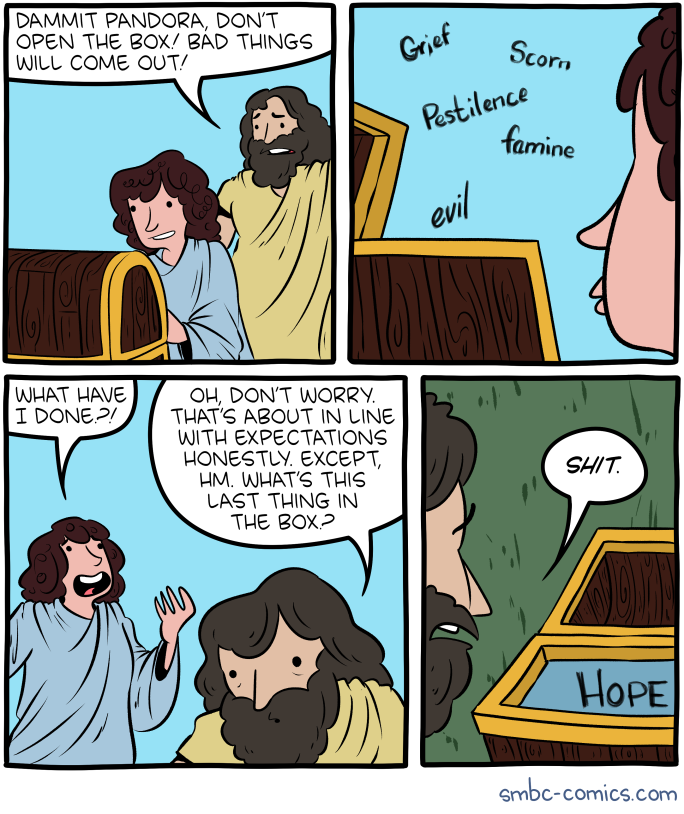
The comic retells the myth of Pandora's Box. A character shouts at Pandora not to open the box because bad things will come out. In the next panel, Pandora has opened it and asks in horror what she has done. Another character reassures her not to worry, explaining that a line in the myth says "all the evils of the world came out, honestly except we're not sure what this last part about the box means." We see items labeled "God," "Science," "Pestilence," and "Famine" escaping from the box.
The final panel shows the box still containing "Hope" at the bottom -- the traditional ending of the Pandora myth. But the joke reframes this: the implication is that Hope being trapped in the box (unable to get out) is not a consolation but rather the cruelest part of the whole affair. The word "BUT" appears prominently as the character peers into the box and sees Hope still stuck inside.
The Humor
The humor comes from engaging with a genuine scholarly puzzle about the Pandora myth. In the original Greek myth, after all the evils escape, Hope (Elpis) remains trapped in the jar. Scholars have long debated whether this is supposed to be comforting (humanity still has hope) or devastating (hope is locked away and inaccessible). The comic leans into the ambiguity and plays it for dark comedy -- the visual of Hope stuck at the bottom of the box, unable to escape like everything else, suggests the bleaker interpretation.
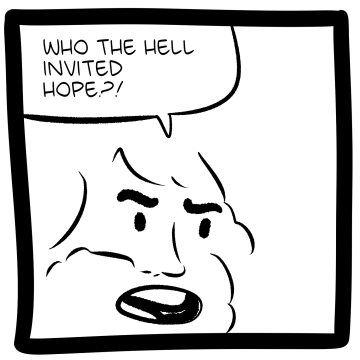
The comedy also comes from the casual, modern tone applied to an ancient myth. The characters react to world-ending catastrophe with the energy of someone who has made a minor household mistake.
References
The comic directly references the Greek myth of Pandora's Box (originally Pandora's Jar, or pithos). In Hesiod's "Works and Days," Pandora opens the jar and releases all evils into the world, but Hope remains inside. The scholarly debate about whether Hope's entrapment is good or bad for humanity is a real and ongoing discussion in classical studies.