Pleasure
Explanation
The Joke
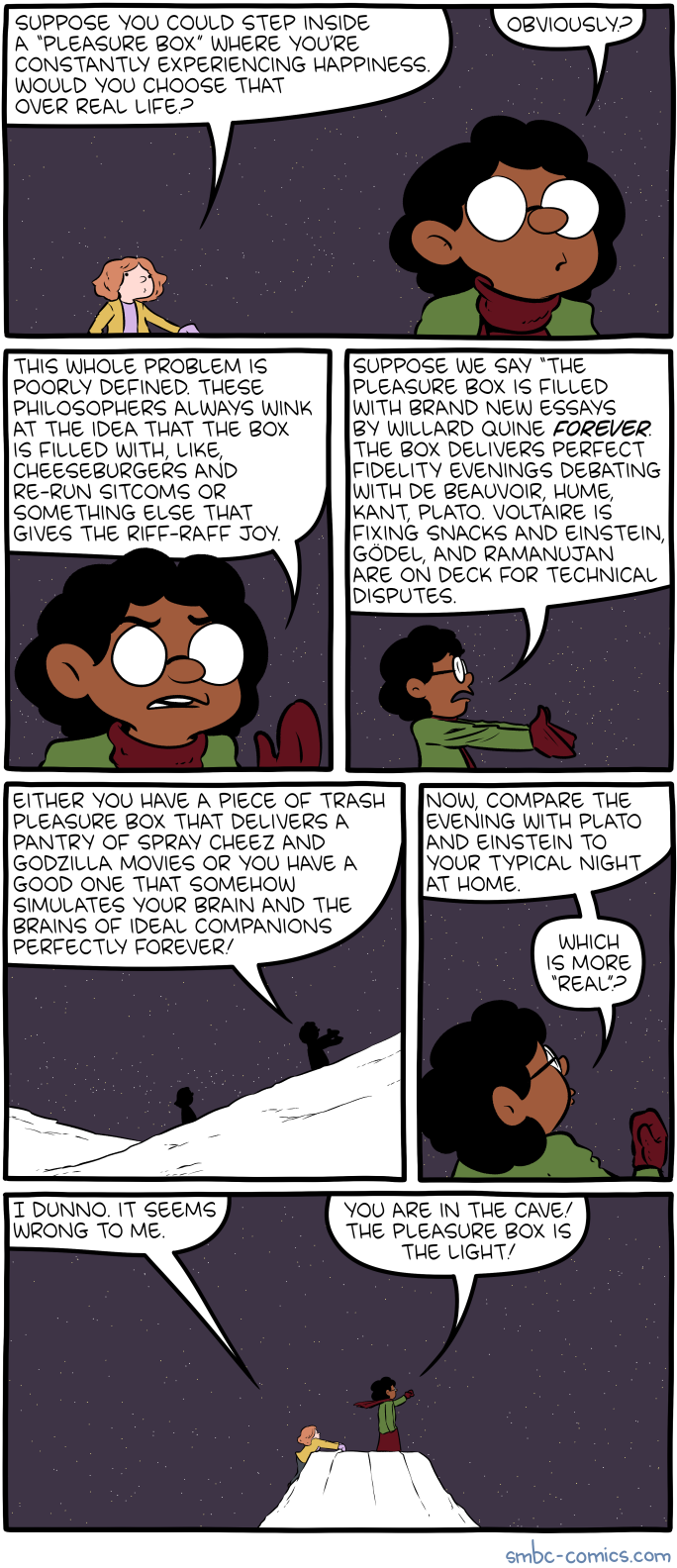
The comic opens with a thought experiment: if you could step inside a "pleasure box" that would make your consciousness experience maximum happiness, more than you could ever have in real life, would you do it? One character says "obviously" they would. The other character, playing the role of a philosopher, pushes back. They explain that the major problem philosophers have always had with the pleasure box is that it replaces real experience with simulation -- you might think you are drinking coffee with friends or having great conversations, but really you are just having your brain stimulated.
The philosopher then sets up a comparison: you could either have a piece of toast while reading from a pantry of great philosophy books (Greek classics, Voltaire, Einstein, etc.) or you could sit in the pleasure box which simulates something much more enjoyable. The punchline comes when the first character asks which is "more real" -- and answers that the pleasure box is more real, because actually reading those books is itself a form of brain stimulation. The philosopher is left sputtering that this seems wrong, and is told "You are in the cave. The pleasure box is outside."
The Humor
The comic cleverly turns the classic philosophical objection to experience machines on its head. Philosophers typically argue that "real" experience is superior to simulated pleasure, but the comic points out the uncomfortable truth that reading philosophy books is itself just a way of stimulating your brain -- it is not inherently more "real" than direct neural stimulation. The final line about "the cave" brilliantly inverts Plato's Allegory of the Cave, suggesting that the philosopher clinging to "authentic" experience is actually the one trapped in shadows, while the pleasure box represents the true light.
The humor works because it takes a well-worn philosophical argument seriously enough to find a genuine logical weakness in it, then delivers the reversal with confidence. The philosopher's discomfort at having their own tools used against them is a classic SMBC move.
References
The comic directly references Robert Nozick's "Experience Machine" thought experiment from his 1974 book "Anarchy, State, and Utopia," which asked whether people would choose to plug into a machine that provides perfect simulated happiness. It also references Plato's Allegory of the Cave from "The Republic," where prisoners mistake shadows for reality. The philosophers and thinkers mentioned (Greek philosophy, Voltaire, Einstein) represent the Western intellectual canon that the philosopher character values as "real" experience.